
At a glance
The engagement
About the client
Godfrey Phillips India
Godfrey Phillips India sells through a nationwide network of independent Wholesale Distributors, on behalf of multiple sister business units sharing the same distribution footprint. A distributor's sales happen in two stages: primary sales what the company ships to distributors and secondary sales what distributors actually sell through to retailers, dealers, modern trade and hawkers. The moment a business scales past a certain number of distributors, Head Office naturally has full visibility into the first stage and none into the second. That is not a technology failure; it is what happens by default in any distribution business without a shared system for distributors to report their own sell-through.
The business challenge
Head Office knew what shipped not what sold through.
Before this platform existed, Head Office only knew what it shipped to distributors not what actually sold through to the market. Without sell-through data, demand and replenishment planning could only work against shipments, making it hard to catch slow-moving stock or distributor overstocking while it was still fixable. Trade schemes and quarterly targets were set and judged against primary sales alone, with no independent way to confirm whether a scheme actually moved product in the market or simply moved it onto a distributor's shelf.
And without a structured, data-backed way to track each distributor's sell-through against target, performance conversations tended to be informal and inconsistent across branches and states rather than driven by a common scorecard. The underlying challenge was the absence of a shared, real-time system of record for secondary sales a gap that opens up in any growing distributor network, and one a purpose-built platform is the standard, proven way to close.
What Triazine Software built
A self-reporting, reconciling, scoring system of record not a dashboard.
Triazine Software built the Secondary Sales Platform for distributor self-reporting, automated SFA reconciliation, incentive scorecards and national-scale rollups live since 2021.
Every distributor reports their own sell-through
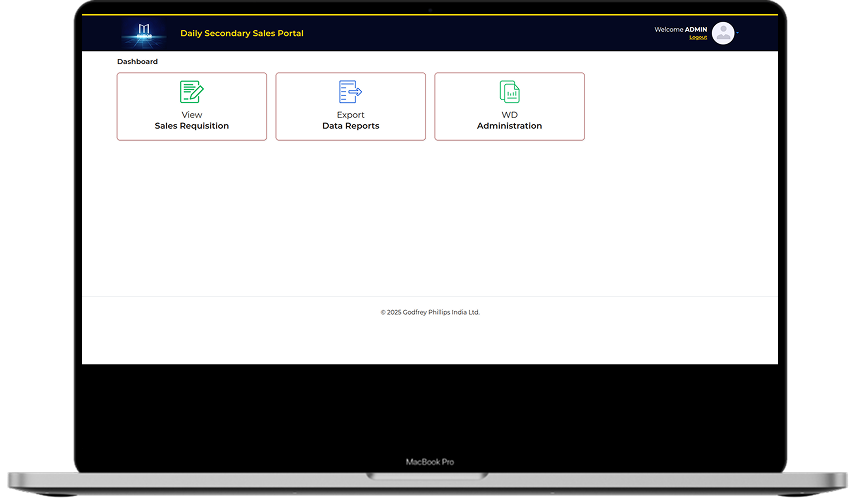
Distributors log in directly to submit their own secondary sales, broken down by channel retail, dealer, modern trade including quick-commerce and HORECA, and hawker and by business unit, so one platform covers every sister company sharing the distribution network. Branch users can enter or validate sales on a distributor's behalf, so a distributor who is slow to self-report never blocks head-office visibility, and role-based permissions mean a distributor sees only their own data, a branch user only their branch, and Head Office everything.
- Channel-level capture retail, dealer, modern trade (C&C, quick-commerce, HORECA) and hawker, per business unit
- Branch backstop branch users enter or validate on a distributor's behalf when needed
- Role-scoped visibility distributor → branch → state → Head Office, each seeing exactly their entitlement
Automated reconciliation from distributors' own field-sales systems
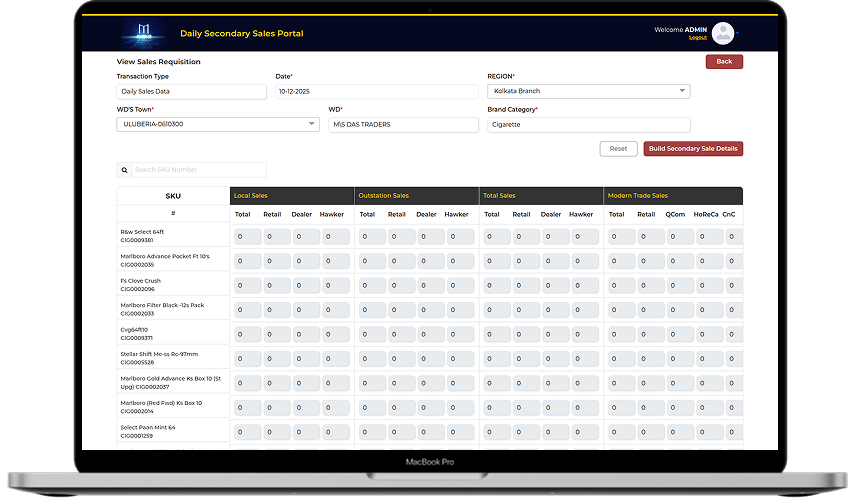
Sales flow in automatically from distributors' independently chosen field-sales (SFA) systems on a scheduled pull, with every incoming record validated against expected structure before it is accepted. Mismatches are logged and surfaced by automated email alert rather than silently written to the sales ledger, and sales remain distinguishable by source, so any reconciliation question traces back to the originating feed. Time-gated submission windows freeze entry per a cut-off schedule different windows for branch users and distributors so a closed period stays closed.
- Scheduled SFA ingestion validated at the gate, never silently accepted
- Mismatches flagged logged and alerted by email, traceable to the source feed
- Time-gated windows submissions freeze on schedule, protecting closed-period integrity
An in-house incentive scorecard that distributors actually watch
Quarterly sales targets are set per distributor per business unit, each with its own weightage, tracked monthly, scored and ranked turning the platform from a data-capture tool into a performance-management program. 1,092 distributors are enrolled in the scorecard program across FY 2024-25 and FY 2025-26, and median quarterly target achievement has held at approximately 101%, consistent across the last four quarters. Distributors see their own scorecard in their portal; branch, state and head-office teams see performance across their scope.
- 1,092 distributors enrolled FY 2024-25 and FY 2025-26 scorecard program
- ~101% median achievement quarterly targets, consistent across the last four quarters
- Weighted, monthly, ranked per-distributor, per-business-unit targets scored on a common basis
Built for daily national scale and proven at it since 2021
Daily sales roll up automatically into weekly summaries with scheduled email reports, and closed-period data archives out of the live tables on schedule, keeping current-period entry and reporting fast while preserving full history. Single Sign-On via SAML integrates with the client's identity provider alongside JWT-secured, Swagger-documented APIs for integration with other client systems. The platform has processed 12,998,587 secondary sales transactions in its current live window averaging roughly 527,000 a month over the trailing year, with monthly volume climbing steadily rather than spiking.
- 12.9M+ transactions in the live reporting window, ~527K/month trailing-12-month run-rate
- Automated rollups & archiving fast operational tables, full history preserved
- Enterprise auth & APIs SAML SSO, JWT tokens, Swagger-documented integration surface
Business outcomes
Sell-through visibility, measured performance, reconciled data.
Verified outcomes only programme metrics from the Secondary Sales Platform at documentation date.
◈For Head Office and planning
The platform closed the gap between sell-in and sell-through: every level of the sales organisation Head Office, 52 state users, 27 branch users and over 1,350 active distributors works from a single, reconciled view of what is actually selling in the market. Demand and replenishment planning works against real market absorption, slow-moving stock surfaces through regular reporting rather than at quarter-end, and automated SFA integration has reduced manual reconciliation across the network.
◎For distributor performance
The in-house scorecard program turned distributor performance management into a structured, measurable discipline: 1,092 enrolled distributors track quarterly targets monthly against a common scoring basis, with median achievement holding at approximately 101% across the last four quarters. Reporting is faster and more reliable across the hierarchy, and the platform scales cleanly as the distributor network keeps growing 1,485 distributors have already recorded sales through it.
Technology landscape
A Django platform in continuous production since 2021.
Built for validated SFA ingestion, role-partitioned visibility, automated rollups and enterprise identity ~42,600 lines of Python, 32 data models, 120+ schema migrations.
Enterprise security & compliance
Independently tested, role-partitioned, auditable by design.
A system of record for a nationwide distributor network holds commercially sensitive data what every distributor sells, where, and against what target. The Secondary Sales Platform protects that data through enterprise identity integration, strict role partitioning and a data pipeline in which nothing enters the ledger unvalidated or untraceable.
As the platform matured into that system-of-record role, it underwent formal Vulnerability Assessment and Penetration Testing, with every finding remediated including endpoint hardening against user and data enumeration so its security posture is independently verified rather than assumed. Triazine Software's delivery processes are governed by CMMI Level 3 certification.
Enterprise Authentication
SAML2 Single Sign-On integrated with the client's identity provider; JWT token-based API access.
Role-Based Access Control
Distributor → branch → state → Head Office partitioning every user sees exactly and only their entitlement.
Data Integrity
Incoming SFA records validated before acceptance; time-gated windows freeze closed periods; duplicate detection and role-aware edit rules prevent conflicting entries.
Auditability
Mismatches logged and alerted, never silently accepted; every sales record distinguishable by source and traceable to its originating feed.
Independent Security Testing
Formal VAPT completed with all findings remediated, including enumeration-hardened endpoints verified against current security standards.
Delivery Governance
Documented Swagger/OpenAPI integration surface; delivery processes certified to CMMI Level 3.
Trust by construction
A platform only becomes a system of record when its data can be trusted. The Secondary Sales Platform earns that trust structurally.
SAMLEnterprise identity
SSO with the client identity provider and JWT-secured APIs.
RBACHierarchy-scoped access
Distributor, branch, state and Head Office each see only their entitlement.
VAPTIndependently verified
Formal testing completed with every finding remediated.
CMMI L3Enterprise delivery
Disciplined development, quality assurance and governance.
Beyond go-live
Five years in production and the run-rate is still climbing.
What began as a way to give Head Office real-time visibility into distributor sell-through has grown, alongside the client's own expanding distributor network, into a full sales-reconciliation and incentive-management platform. Each stage of that growth more distributors, more transaction volume, deeper integration with distributors' own field-sales systems was met with a deliberate engineering response: validated ingestion, role-aware edit controls, automated archiving and an independently audited security posture. The platform is in continuous, active use by 1,450+ people every day, and scales cleanly as the network keeps growing.
Related success stories
More from the FMCG & Consumer Goods practice.
GPI Modern Trade
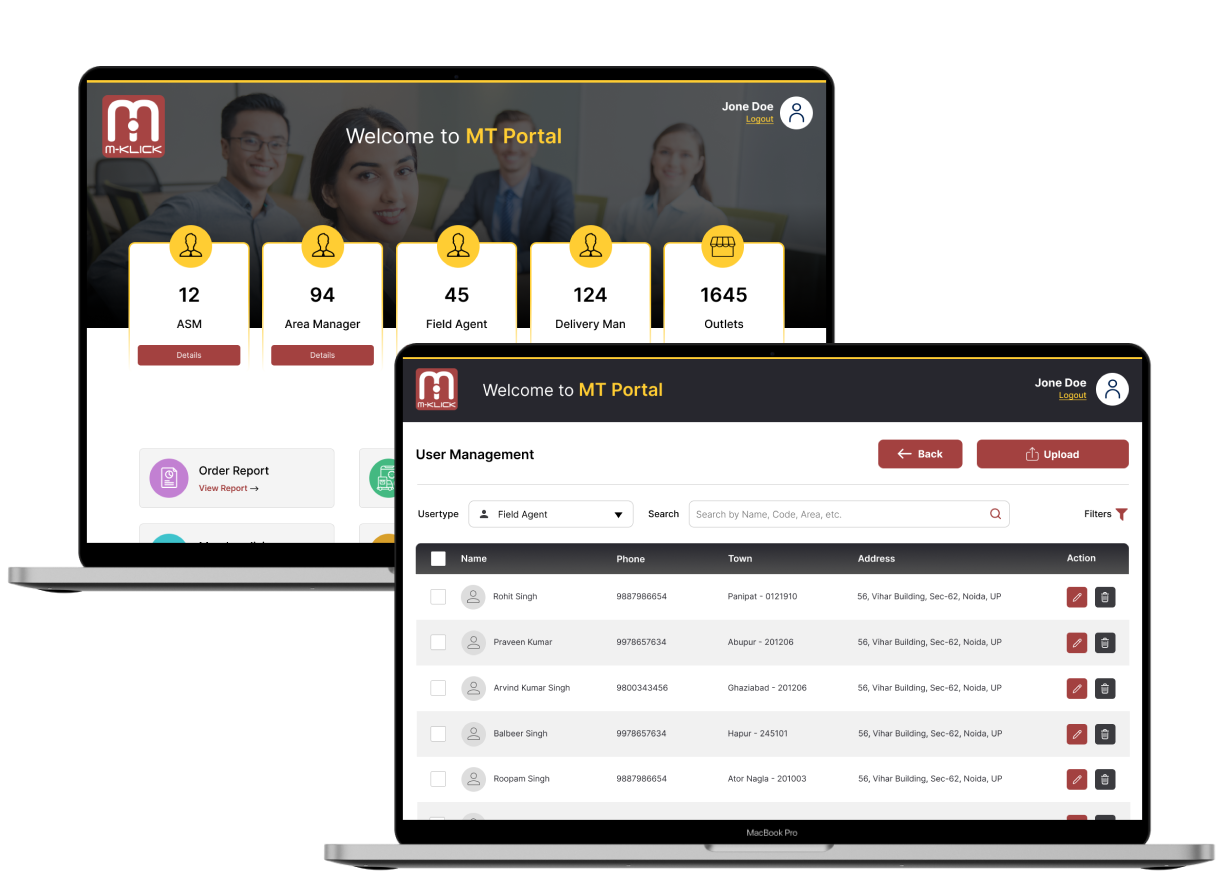
Order and fulfilment platform 13,698 outlets, 99.7% fulfilment.
View case study →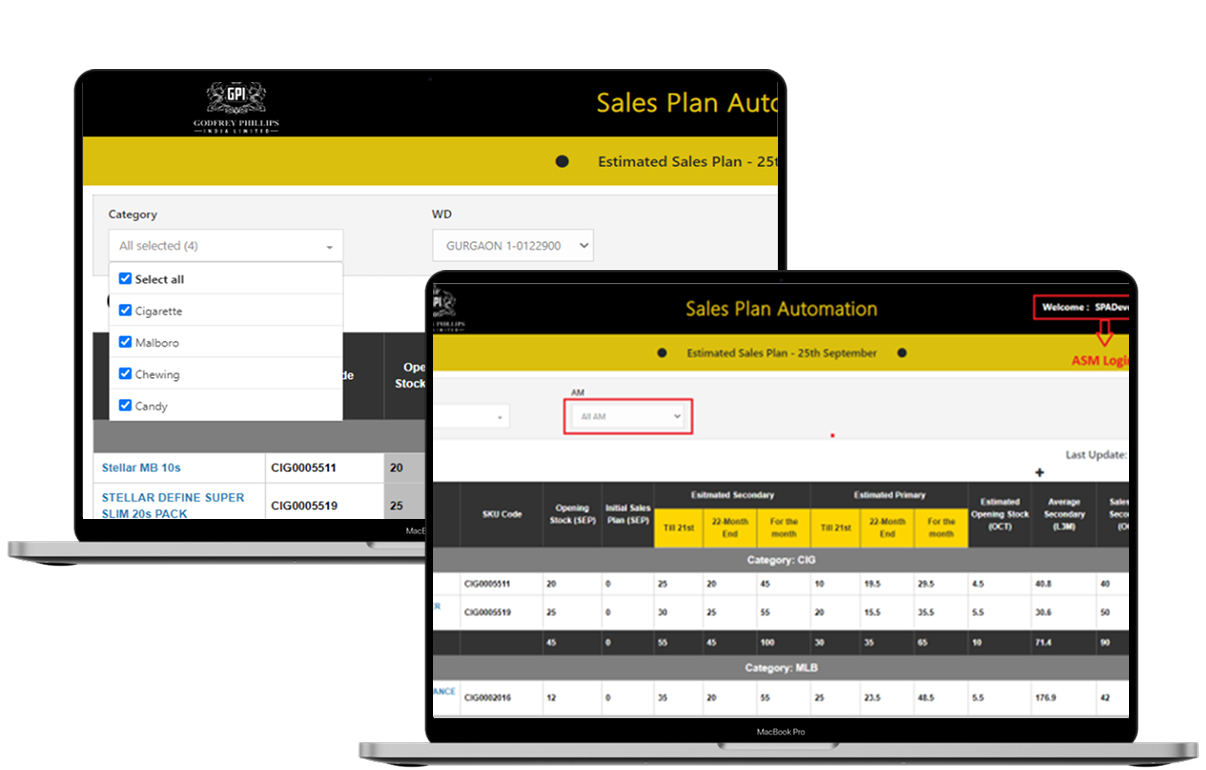
GPIL-CyclePlan
Five-stage approval governance for quarterly field activity.
View case study →
FMCG Digital Transformation All Projects
Explore every platform Triazine has delivered across the FMCG vertical.
View all projects →Work with Triazine Software
Let's close your sell-through visibility gap.
From secondary sales capture and distributor scorecards to modern trade ordering and cycle-plan governance, Triazine builds the systems of record multi-brand FMCG organisations run their distribution on reconciled at the gate, scored on a common basis and proven at half a million transactions a month.