Loader

IT SUPPORT AND MAINTENANCE SERVICES

IT Support and Maintenance Services for Enterprise Applications

Triazine Software keeps the applications and systems your business runs on healthy, secure and up to date: L1 to L3 support, proactive monitoring, security patching, bug fixes, upgrades and small enhancements, under SLAs you can read and hold us to. We support systems we built and systems other teams built, including legacy platforms most vendors no longer touch.

Applications degrade quietly. A dependency falls out of date, a certificate expires, a mobile OS update breaks a screen, a slow query turns into a flood of tickets, and the people who understood the system have moved on to new projects. Most internal teams are stretched between building new things and keeping old ones running, so maintenance waits until something breaks. Our IT support and maintenance services take that ongoing work off their plate: we watch your applications and infrastructure, fix issues before users notice, keep everything patched and current, and answer your users when they need help, with clear plans, clear hours and clear response times. We support clients across the US, UK, UAE, Australia, South Africa and India.

Trusted by IGL, the Tony Elumelu Foundation, Domino's Pizza, Godfrey Phillips, Aavantika Gas, Ministry of Defence, Schindler, University of Cambridge and other enterprises worldwide

Indraprastha Gas Limited Tony Elumelu Foundation Domino's Pizza Godfrey Phillips India Aavantika Gas Limited Ministry of Defence India Toyota Boshoku Schindler University of Cambridge Crompton NTPC Sound Royalties

What Are IT Support and Maintenance Services?

IT support and maintenance services keep business applications and the infrastructure they run on working after go-live: support answers users and resolves incidents, while maintenance keeps systems patched, current and healthy so fewer incidents happen. It is the continuous work that keeps a system healthy long after the initial build: monitoring performance, applying security patches, managing updates, and resolving issues as they surface, on an ongoing basis rather than only when something has already gone wrong.

That's what separates structured maintenance from ad-hoc, reactive troubleshooting. Reactive support waits for a ticket, then scrambles to fix whatever broke. Structured support operates proactively - monitoring system health continuously, patching vulnerabilities before they're exploited, and tracking performance trends that flag a problem building weeks before it becomes an outage.

It's built to keep your systems reliable and secure over time, matched to the actual complexity and criticality your infrastructure genuinely carries - a full, ongoing partnership rather than a one-off engagement that ends at go-live.


Business Outcomes

Fewer Outages, Caught Before They Happen

Fewer Outages, Caught Before They Happen

Continuous monitoring surfaces performance degradation and emerging issues early - resolving problems while they're still minor, ahead of the point where they escalate into a full outage.

Reduced Security Exposure Over Time

Reduced Security Exposure Over Time

Regular patching and vulnerability management keep systems current against known security risks - closing the gap that ageing, unpatched software leaves open to exploitation.

Lower Total Cost Than an In-House Support Team

Lower Total Cost Than an In-House Support Team

Dedicated IT support and maintenance services provide enterprise-grade coverage at a fraction of the cost of building and retaining a full internal support team for every system you run.

Freed-Up Internal Teams, Focused on the Business

Freed-Up Internal Teams, Focused on the Business

With ongoing system health handled externally, your internal team's time shifts toward new development and strategic initiatives, matched to what actually moves the business forward.

The Four Types of Software Maintenance

Good maintenance covers all four, not just fixing what breaks.

Type What it means Examples How often
Corrective Fixing defects that users or monitoring find Bug fixes, failed jobs, broken integrations As issues arise, under the SLA
Adaptive Keeping the system working as its environment changes Browser, mobile OS, API, payment gateway and regulation changes Ongoing, planned with you
Perfective Improving what already works Performance tuning, usability fixes, small enhancements Monthly enhancement hours
Preventive Stopping problems before they happen Patching, dependency updates, monitoring, refactoring risky code Scheduled, every month

You need IT support and maintenance services when

  • Your developers spend more time on fixes and user questions than on new work
  • Nobody is watching the system out of hours
  • Patches and dependency updates wait for a quiet month that never comes
  • The people who built the system have left or moved on
  • Mobile OS or browser updates keep breaking parts of your app
  • You run a legacy system that still matters but few people can maintain

A support contract is not the answer when

  • The system needs a major redesign or re-architecture; see legacy application modernization
  • You need desktop, printer and office network support for staff; that is a different kind of IT helpdesk

Our IT Support and Maintenance Services

Application Helpdesk and L1 to L3 Support

A single point of contact for your application users and IT team: L1 for how-to questions and access, L2 for configuration, data and integration issues, and L3 engineers for code-level fixes, all tracked in one ticketing system with SLA reporting.

Application Monitoring & Health Management

Continuous monitoring of application performance, uptime, and system health - surfacing issues early through proactive alerting, rather than discovering them only after users report a problem.

Security Patching & Vulnerability Management

Regular assessment and patching of security vulnerabilities across your application and infrastructure stack, keeping systems current against known risks as they emerge.

Bug Fixes & Issue Resolution

Structured triage and resolution of reported issues, prioritised by business impact and severity, so critical problems get resolved fast while lower-priority items stay tracked and managed.

Enhancements, Upgrades and Mobile App Maintenance

Monthly hours for small enhancements and change requests, framework and library upgrades, and mobile app maintenance for new iOS and Android versions, app store requirements and crash fixes, so your applications keep up without a new project each time.

Database, Backup and Recovery Management

Database monitoring, tuning, index and storage maintenance, scheduled backups and regular restore tests, so data stays fast, safe and recoverable.

Infrastructure & Server Maintenance

Ongoing maintenance of the servers, databases, and infrastructure your applications run on - including performance tuning, capacity planning, and routine maintenance work that keeps systems running smoothly.

Legacy System Support

Continued support for ageing systems that still run critical business functions, including specialised expertise in older frameworks and languages that have moved beyond most internal teams' active expertise.

SLAs and Reporting

Defined response times, escalation paths, and coverage windows matched to system criticality - so support commitments are clear, measurable, and aligned to what each system actually requires.

Support Plans: What Is Included and What Is Not

Every plan is scoped to your systems during onboarding. These are the three starting points.

Essential Standard Enterprise
Best for Stable, lower-criticality applications Business-critical applications Revenue- or safety-critical platforms
Monitoring and alerting Yes Yes Yes, with application performance monitoring
Coverage hours Business hours Extended hours 24/7 for P1 and P2
Critical (P1) first response 4 hours 1 hour 15 minutes
L1 user helpdesk Optional Yes Yes
L2 and L3 issue resolution Yes Yes Yes
Security patching and dependency updates Monthly Monthly, critical fixes fast-tracked Monthly, critical fixes fast-tracked
Small enhancement hours per month None Up to 8 hours Up to 20 hours
Framework and mobile OS upgrades On request Planned Planned
Backup checks and restore tests Quarterly Monthly Monthly, with recovery drills
Reporting Monthly Monthly Monthly, plus quarterly review
Named service manager No Yes Yes

Not included in any plan

  • New features or modules beyond the monthly enhancement hours, which are quoted as separate projects
  • Purchase or installation of hardware and third-party licences
  • Issues caused by your internet provider or by third-party systems outside our scope, which we help diagnose and coordinate
  • Office desktop, printer and staff device support

How We Take Over and Support Your Systems

Taking over a system from another team usually takes two to four weeks, with a knowledge-transfer period run alongside the outgoing team where possible.

  1. Onboarding & assessment

    Understand your existing systems, architecture, and current support gaps.

    Typical duration: weeks 1-2, including code, architecture and documentation review

  2. Monitoring setup

    Implement monitoring and alerting across applications, infrastructure, and security.

    Typical duration: weeks 2-3

  3. SLA definition

    Define response times, escalation paths, and coverage windows matched to system criticality.

    Typical duration: week 2

  4. Proactive maintenance

    Apply patches, updates, and routine maintenance on a defined, ongoing schedule.

    Typical duration: from week 4, on a monthly schedule

  5. Issue triage & resolution

    Prioritise and resolve reported issues based on business impact and severity.

    Typical duration: from day 1 of go-live, under the SLA

  6. Performance review

    Track system health and support metrics on a regular cadence with your team.

    Typical duration: monthly

  7. Continuous improvement

    Refine monitoring, processes, and coverage as systems and business needs evolve.

    Typical duration: quarterly

  8. Ongoing support

    Maintain continuous coverage, feeding learnings back into monitoring setup and process refinement.

    Typical duration: continuous

Proactive Support, Human-Owned Accountability

We use monitoring and automation to catch problems early, not to hide behind tickets and auto-replies. Our engineers stay accountable for every incident, patch and change, and your team stays in control of what changes in your systems and when. Users reach people who know the application, every incident ends with an explanation, every change follows your approval rules, and every runbook and document stays fully owned by you.

01

People who know your system

A named team supports your applications, with runbooks and architecture notes for each one, so issues are handled by engineers who already understand how it works.

02

Fixed before users notice

Monitoring flags errors, slow responses, failed jobs and expiring certificates, so most issues are resolved before they become tickets.

03

Every incident explained

Critical incidents end with a plain-language root-cause summary and the fix that stops them recurring.

04

Nothing locked away

Runbooks, documentation and code changes live in your repositories, so you can bring support in-house or change provider without losing knowledge.

Service Levels

Severity Example First response Updates
P1 Critical System down or data at risk for many users 15 minutes to 4 hours, by plan Every 30 minutes
P2 High Major feature broken, no workaround 30 minutes to 8 hours, by plan Every 2 hours
P3 Medium Feature impaired, workaround available 1 business day Daily
P4 Low Questions, minor issues and requests 2 business days As agreed

Who Handles What: L1, L2 and L3 Support

Level Who Handles Example
L1 Application support analysts How-to questions, access and password issues, known issues "How do I approve this request?"
L2 Application and infrastructure engineers Configuration, data fixes, integration and performance issues An integration stops sending orders to the ERP
L3 Developers who know the code Code-level defects, root-cause fixes, hotfix releases A calculation error in a billing module

What We Monitor

  • Uptime and response time for every application and API
  • Error rates, logs and failed background jobs
  • CPU, memory, disk and database performance
  • Backups and restore test results
  • SSL certificate and domain expiry
  • Known vulnerabilities in code dependencies
  • Integration and API health with ERP, CRM, SAP and payment systems
  • Crash reports and ratings for mobile apps

Technology Stack & Platforms

We deliver IT support and maintenance services on enterprise-proven monitoring, ticketing, and infrastructure management platforms - backed by delivery discipline proven across 11+ years of mission-critical software delivery.

Datadog

New Relic

Nagios

Zabbix

Prometheus

Grafana

Splunk

ELK Stack

Jira Service Management

Zendesk

PagerDuty

Opsgenie

SonarQube

AWS

Microsoft Azure

Google Cloud

Terraform

Ansible

.NET

Java

PHP

Python

Django

Node.js

Angular

React

Flutter

Security, Compliance and Business Continuity

Support teams hold the keys to your systems, so access, data and changes are controlled as tightly as the systems themselves.

01

Named, time-bound access

Engineers use named accounts with only the access each task needs, time-limited where possible, and every action is logged.

02

Patch and vulnerability management

Operating systems, frameworks and dependencies are patched on a monthly schedule, with critical vulnerabilities fast-tracked, and platforms such as TEFConnect pass independent VAPT before go-live.

03

Controlled changes

Every fix and update follows your change approval process, is tested before release and has a rollback plan.

04

Backup and recovery you have tested

Backups are checked and restores are tested on a schedule, so recovery is proven before you need it.

05

Data protection

Production data is accessed only when a task requires it, masked where possible, encrypted in transit and at rest, and handled in line with GDPR, India's DPDP Act and your own policies.

06

Process standards and IP protection

CMMI Level 3 delivery governance and ISO 9001:2015 quality management standards. Your systems are protected by our Non-Disclosure Agreement, and every runbook, script and code change belongs to you.

What Clients Say About Working With Triazine

"Working with Triazine Software was an excellent experience. Their flexibility, responsiveness, and problem-solving expertise delivered every requirement, improved our app store ratings, enhanced customer experience... and significantly reduced the cost of resolving customer complaints."

Anadi Mishra

Chief General Manager, Indraprastha Gas Limited (India)

"Triazine Software was recommended by IBM for our Pizza Online Ordering mobile app and the team stood up to our expectation... I highly recommend Triazine Software as dependable development partner for organization like us."

Sudhir Kumar Singh

Technical Program Manager, Domino's Pizza (India)

"We weren't looking for a traditional vendor. We wanted a true technology partner who could integrate with our team, understand our creators, and share our vision. Feels like one unified team collaborating across continents."

Chip Correra

Fractional CTO, Sound Royalties (United States)

"Triazine delivered high-quality work on time, transforming our vision into a successful hybrid app. Their patience, responsiveness, flexibility across time zones, and commitment to implementing every feedback ensured outstanding results."

Roger Yarrow

CEO, TrueLook (United States)

"Triazine Software transformed Ticketkore with a powerful smart ticketing and reservation platform."

Khomotjo R. Lebepe

CEO, Ticketkore (South Africa)

Why Choose Triazine for IT Support and Maintenance Services?

Triazine Software helps enterprises move from reactive firefighting to proactive system health management. Our approach combines continuous monitoring discipline with the engineering depth needed to actually resolve what monitoring surfaces.

01

Proactive Monitoring, Catching Issues Early

Every support engagement includes continuous monitoring that surfaces performance and security issues while they're still minor, well ahead of a full outage.

02

Security Patching on a Defined Schedule

Systems are patched every month against known vulnerabilities, with critical fixes fast-tracked, so security work happens on schedule rather than after an incident.

03

Response Times Matched to System Criticality

We define clear SLAs, escalation paths, and coverage windows based on how critical each system actually is to your operations.

04

Deep Familiarity With Your Actual Architecture

As the same team behind your custom software and integrations often provides ongoing IT support and maintenance, support work benefits from architectural knowledge that takes a new, unfamiliar vendor months to build up.

05

Legacy System Expertise Included

Our support extends to ageing systems and older frameworks, so critical legacy applications stay supported even as the specialised skills to maintain them become harder to find internally.

06

Delivery Discipline That Scales With Complexity

CMMI Level 3-certified process discipline underpins every engagement, regardless of system size, criticality, or technical complexity.

07

Clear Scope: What Is Included and What Is Not

Every plan lists what is covered, the hours you are covered and how fast we respond, and what is outside scope, so there are no surprises when you raise a ticket.

Who You Will Work With and How to Reach Support

Triazine Software was founded in 2015 by Abhinav Kumar and Vikash Srivastava to help enterprises replace fragmented systems and manual workarounds with platforms that run with clarity, governance and accountability. Abhinav, Co-Founder and Director, brings over two decades of enterprise software engineering experience and leads technology direction and delivery. Vikash, Co-Founder and Director, leads operations, client success and strategic partnerships.

Your support team

A service manager who owns your SLA, monthly reports and reviews

L1 application support analysts who answer users and handle access and how-to requests

L2 application and infrastructure engineers who resolve configuration, data and integration issues

L3 developers who fix code-level defects and release hotfixes

Meet the leadership and core team

Contact and locations

Support and sales, USA: Triazine Software LLC, 8 The Green, Ste A, Dover, DE 19901. +1 (347) 941-1655

Support and sales, India: Triazine Software Pvt. Ltd., B-28 & 29, Sector 58, Noida 201301. +91-120 4275378

Email: sales@triazinesoft.com

Serving enterprises across North America, Europe, the Middle East, Africa and Asia Pacific.

Frequently Asked Questions

IT support and maintenance services keep business applications and the infrastructure they run on working after go-live. Support answers users and resolves incidents; maintenance keeps systems patched, current, monitored and backed up so fewer incidents happen.

Support is reactive help when something goes wrong or a user needs assistance. Maintenance is the planned, ongoing work that prevents problems: patching, updates, monitoring, tuning and backups. A good service combines both.


They are IT support and maintenance focused on business applications: helping application users, fixing defects, keeping integrations working, applying framework and security updates, upgrading for new browsers and mobile OS versions, and making small enhancements.

Corrective maintenance fixes defects, adaptive maintenance keeps the system working as its environment changes, perfective maintenance improves performance and usability, and preventive maintenance stops problems through patching, monitoring and refactoring.

L1 handles how-to questions, access and known issues. L2 handles configuration, data, integration and performance issues. L3 is developers who fix code-level defects and release hotfixes. Tickets move up only when the lower level cannot resolve them.

Depending on the plan: monitoring and alerting, L1 to L3 support, monthly security patching, bug fixes, backup checks and restore tests, monthly reporting, and in higher plans, small enhancement hours, planned upgrades and a named service manager. Each plan also lists what is not included.

Coverage depends on the plan: business hours for Essential, extended hours for Standard, and 24/7 for critical and high-severity incidents for Enterprise.

First response to a critical (P1) incident is between 15 minutes and 4 hours, depending on the plan, with regular updates until it is resolved and a root-cause summary afterwards.

Yes. We review the code, architecture and documentation, set up monitoring and runbooks, and run a knowledge-transfer period with the outgoing team where possible. Taking over usually takes two to four weeks.

Yes. We support older frameworks and languages that most internal teams no longer work with, and when a legacy system needs more than maintenance, our legacy application modernization team plans the next step.

Yes. We update apps for new iOS and Android versions and app store requirements, fix crashes reported by monitoring, and keep backend APIs and integrations working, as we have for consumer apps used by millions.

Reactive support waits for a ticket and then fixes what broke. Proactive support monitors continuously, patches on a schedule and spots warning signs early, so many issues are fixed before users notice.

A monthly report covering SLA performance, incidents and their root causes, uptime and performance, patches applied, backup and restore results, and recommendations, plus a quarterly review for higher plans.

Engineers use named, time-bound access with full logging, production data is accessed only when needed and masked where possible, changes follow your approval process, and systems are patched monthly with critical fixes fast-tracked.

Yes. Triazine Software LLC is registered in Dover, Delaware, and you can reach the US team on +1 (347) 941-1655 or sales@triazinesoft.com. Delivery is run from our Noida, India centre with US clients such as Sound Royalties and TrueLook.

Get a Free System Health Check

Tell us which applications you need supported and what is causing the most pain today. We will respond within 24 hours to set up a short review, and you will leave with the top risks in your current setup, the quick fixes worth doing first and the support plan that fits. Your systems are protected by our Non-Disclosure Agreement.

Request a Health Check

Prefer to talk? US: +1 (347) 941-1655 | India: +91-120 4275378 | sales@triazinesoft.com

Proven Excellence

Trusted by Enterprise Operations.

  • 11+ yrs — Enterprise delivery
  • CMMI L3 — Certified process
  • 100% — Runbook & documentation ownership

See Our Support Plans

Support desk: US +1 (347) 941-1655 | India +91-120 4275378 | sales@triazinesoft.com

99.9% Uptime under concurrent load (TEFConnect)
2M+ Customers on a platform in a multi-year partnership (IGL)
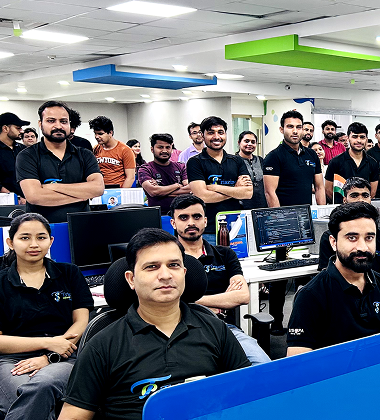
Triazine team
15,000+ Concurrent users after re-engineering a failing app (Domino's)
100% Runbook & documentation ownership