Application Assessment & Modernization Roadmap
A structured evaluation of your existing system, covering architecture, dependencies, technical debt, and embedded business logic, resulting in a prioritised roadmap for what to modernize first and why.

LEGACY APPLICATION MODERNIZATION SERVICES
Triazine Software modernizes ageing enterprise applications onto modern, cloud-ready architecture without stopping the business that runs on them. We keep the business logic that still earns its place, replace the technical debt underneath it, and move users across in phases, so there is no big-bang cutover. You own every line of code, and delivery follows CMMI Level 3 discipline.
Every enterprise runs at least one system that has outlived its architecture: built on a framework the market has moved past, understood by a shrinking group of people, and more expensive every year to secure, scale or extend. That system still carries years of business rules, so rebuilding it from a blank page risks losing exactly what makes it valuable. We treat legacy application modernization as a controlled migration: assess first, choose the right approach for each part of the system, and modernize incrementally with the old and new running side by side until the new one has proven itself. We deliver for clients across the US, UK, UAE, Australia, South Africa and India.
Trusted by the Tony Elumelu Foundation, Domino's Pizza, IGL, Godfrey Phillips, Ministry of Defence, Toyota Boshoku, Schindler, University of Cambridge and other enterprises worldwide











Legacy application modernization is the process of moving an ageing application onto a modern, maintainable architecture while carrying forward the business logic that still works.
A legacy system rewrite starts from scratch, discarding years of embedded business rules along with the outdated code. This high-risk, high-cost approach often reintroduces bugs the original system solved long ago. Legacy application modernization services take a more measured path: assess what still works, identify what's actively creating risk, and migrate incrementally onto modern architecture, carrying proven business logic forward while replacing the technical debt underneath it.
That's what separates genuine application modernization services from a simple lift and shift to the cloud. Moving an old application onto new infrastructure while skipping re-architecture just relocates the same technical debt to a more expensive environment. Legacy application modernisation restructures the application itself: refactoring monolithic code into maintainable services, updating outdated frameworks, and rebuilding the integrations that connect it to the rest of your stack.
The goal is to reduce risk and technical debt while keeping the business value already built into the system, updating the architecture underneath the application without discarding the operational logic your team has refined over years of real use.
Business Outcomes

Legacy platforms running on end-of-life frameworks or unsupported dependencies carry real security and compliance exposure. Modernization moves that risk onto current, actively maintained technology, closing the gap before it becomes an incident.

As systems age, they become progressively more expensive to maintain as the talent pool for outdated frameworks shrinks. Modern architecture reduces both the maintenance burden and the specialised, harder-to-find skills required to sustain it.

Monolithic, tightly coupled legacy code slows every new feature request, since a change in one place risks breaking three others. Modernized, modular architecture lets teams ship changes without that ripple effect.

Modern infrastructure and refactored application architecture handle growing transaction volume and user load far more efficiently than a legacy system built for a smaller scale of operation years ago.
There is no single way to modernize. Most enterprise systems need a mix, applied module by module, which is why every engagement starts with an assessment. Here is how the seven common approaches compare.
| Approach | What changes | Risk | Effort | Choose it when |
|---|---|---|---|---|
| Rehost (lift and shift) | Infrastructure only; code stays the same | Low | Low | You must exit a data centre fast; plan further work later |
| Replatform | Runtime, database or hosting is upgraded; code mostly unchanged | Low to medium | Low to medium | The framework is end-of-life, but the design is still sound |
| Refactor | Code is restructured without changing behaviour | Medium | Medium | The code works but is hard to change, test or secure |
| Rearchitect | Monolith split into services, APIs and cloud-native components | Medium to high | High | Scale, release speed or integration needs have outgrown the design |
| Rebuild | Application rewritten on a modern stack, keeping requirements and data | High | High | Code quality is too poor to save, but the business rules are clear |
| Replace | Application retired in favour of a SaaS or packaged product | Medium | Medium | A product now covers the function and it is not differentiating |
| Retain or retire | Left as is, or switched off | Low | Low | The system is stable and low-risk, or no longer used |
Rehosting alone moves the same technical debt to a more expensive environment. We use it only as a first step when a deadline demands it and plan the refactoring or re-architecture that follows.
We will tell you if replacing the system is a better choice than modernizing it. For EHS and permit-to-work, our own configurable product PrimeEHS may fit better than a rebuild.
A structured evaluation of your existing system, covering architecture, dependencies, technical debt, and embedded business logic, resulting in a prioritised roadmap for what to modernize first and why.
Breaking apart tightly coupled, monolithic applications into modular, independently deployable services, improving scalability, deployment speed, and long-term maintainability. See our reasoning on when this split is worth it before committing to a full refactor.
Migrating legacy applications onto modern cloud infrastructure with genuine re-architecture, not a simple lift and shift, so the application is actually built to use cloud-native capabilities instead of just running on it.
Migrating legacy databases and data models onto modern, scalable platforms, improving performance, reliability, and the system's ability to support new application capability without a schema redesign every time.
Replacing brittle, outdated integration methods with modern, well-architected APIs, connecting the modernized application cleanly to your ERP, CRM, EHS, and operational systems.
Go-live is the starting point. We monitor the modernised system's performance, security, and technical health through our IT support and maintenance service, extending and refining it as business needs and technology evolve.
Move applications off end-of-life frameworks and runtimes, such as .NET Framework to modern .NET, legacy Java EE to Spring Boot, older PHP versions to current releases, and AngularJS to Angular or React, with automated tests guarding behaviour at every step. See our .NET, PHP and JavaScript framework teams.
Replace dated desktop, client-server or web interfaces with responsive web and mobile front ends on top of modernized APIs, so users get a modern experience without waiting for the whole back end to be rebuilt. For Domino's, a redesigned ordering journey cut store selection time by over 40%. Led by our UI/UX design and redesign team.
Package legacy components into Docker containers, orchestrate them with Kubernetes, and put CI/CD pipelines, automated testing and monitoring around them, so releases become routine instead of risky. See DevSecOps and cloud managed services.
Choose the model that matches how much you already know about the system. Most clients start with a fixed-price assessment, then pick up a model for the modernization itself.
Best as the first step. A code, architecture, and dependency review that ends with a prioritized roadmap, the right approach for each module, and a firm estimate.
Best when the assessment has defined a clear phase, such as one module, a framework upgrade, or a cloud move. Scope, milestones and budget are agreed upfront.
Best for multi-phase programmes that run for a year or more. A stable team of architects, engineers, and QA works as an extension of yours. See our dedicated development centre.
Best when your team owns the plan and needs specialists in a legacy or target technology. Explore staff augmentation and hiring software engineers.
Most single-application modernizations reach a production pilot in 3 to 6 months; large monolith re-architectures run in phases over 6 to 18 months, with value delivered at each phase.
We evaluate the existing system's architecture, dependencies, technical debt, and embedded business logic, so the modernization plan is based on what the system actually needs, not a generic checklist.
Typical duration: 2-4 weeks
We prioritise what to modernize first based on risk, business impact, and technical complexity, giving you a sequenced plan rather than an all-at-once commitment.
Typical duration: 1-2 weeks
We design the modernized architecture, data model, and integration points around your actual operations, reviewed with your team before any migration work begins.
Typical duration: 2-4 weeks
We migrate and refactor in phased stages, one module or service at a time, minimising disruption to live operations throughout rather than a single high-risk cutover.
Typical duration: 2-week sprints, one module at a time
The modernized application is reconnected to your existing ERP, CRM, EHS, or operational systems, with each integration tested against real data before it goes live.
Typical duration: Inside sprints
Functionality, performance, and security are validated against the original system's behaviour and any new requirements through our DevSecOps review process, before anything reaches production.
Typical duration: Continuous, plus a parallel run against the legacy system
We release into production on a limited, closely monitored scope, using real users and real data with a contained blast radius, so issues surface before the full rollout.
Typical duration: 2-6 weeks
Once pilot performance holds up, we retire the legacy system and move every user and workflow onto the modernized application, with the limited-scope safety net removed only at this stage.
Typical duration: Phased cutover with rollback ready
We track performance, security, and technical health on an ongoing basis through our IT support and maintenance service, and feed what we learn back into the roadmap for the next phase of work.
Typical duration: Ongoing
We use AI to speed up legacy modernization, not to replace engineering judgment. Our engineers stay responsible for the target architecture, migration approach, data integrity, security, and testing. AI shortens the slowest parts of the work, understanding old code and proving the new system behaves the same, but every output is reviewed and validated by experienced engineers before it ships, and the system we hand over stays fully owned by you.
AI-assisted code analysis maps dependencies, data flows and business rules in legacy code, and drafts documentation where none exists, so the assessment is not limited by who still remembers how the system works.
AI helps generate characterization tests that capture what the legacy system does today, so every refactored module is checked against the original before it replaces it.
Modernization is the right moment to add intelligence. On TEFConnect we added OCR document verification that catches 100% of duplicate applications and a chatbot that answers in English, French, Arabic and Portuguese. See AI-powered document processing, conversational AI and agentic AI.
We agree up front which code and data AI tools may access on your project and document it in the engagement.
| From (legacy) | To (modern) | Proof |
|---|---|---|
| PHP monolith | .NET microservices in Docker and Kubernetes on Azure, Next.js front end | Delivered: TEFConnect |
| Mobile app capped at ~10,000 concurrent users | Hybrid cross-platform app on AWS auto-scaling, 15,000+ concurrent users | Delivered: Domino's |
| .NET Framework, WebForms, WCF | .NET 8 / ASP.NET Core, REST APIs | Capability |
| Legacy Java EE applications | Spring Boot services | Capability |
| AngularJS, jQuery front ends | Angular, React, Next.js | Capability |
| Desktop and client-server applications | Responsive web and mobile applications | Capability |
| On-premises servers | AWS, Azure or Google Cloud, containerized | Capability |
| File-based and point-to-point integrations | REST, GraphQL and gRPC APIs, real-time SAP and ERP sync | Delivered: AGL Connect (SAP) |
We deliver legacy application modernization services on modern, enterprise-proven frameworks and cloud platforms, backed by infrastructure and delivery discipline built across 11+ years of mission-critical software delivery.















We choose the target stack that fits your team and roadmap, and we would rather move you to a stack your team can maintain than one only we can. Combinations running in production after modernization: .NET microservices with Docker and Kubernetes on Azure, Azure MySQL with a read replica, Azure Fabric and Power BI, monitored with Prometheus and Grafana (TEFConnect); IBM MobileFirst hybrid apps on AWS auto-scaling with AppsFlyer, CleverTap and Google Analytics (Domino's).
Business continuity, data integrity and security are planned before the first module moves. We build systems that support your regulatory obligations; certification of your own organisation stays with you and your auditor.
Old and new systems run side by side while traffic moves across one module at a time (the strangler pattern), with blue-green releases and a tested rollback path at every step. On Domino's, auto-scaling infrastructure removed the downtime-related revenue loss of the old app.
Every data migration is rehearsed, reconciled record by record against the source, and verified in a parallel run before the legacy database is switched off.
Role-based access, SAML2 single sign-on, JWT-secured APIs and OTP authentication. TEFConnect enforces twelve partitioned user roles, from entrepreneurs to auditors.
Tamper-proof logs of every action, including AI decisions. Architectures support Nigeria's NDPR (TEFConnect), UK and EU GDPR, Saudi PDPL, UAE frameworks and WCAG 2.1 AA accessibility, depending on geography.
Independent vulnerability assessment and penetration testing before go-live, as completed across TEFConnect, plus automated security scanning in the pipeline. See DevSecOps and QA testing.
CMMI Level 3 delivery governance and ISO 9001:2015 quality management standards. Your system is protected by our Non-Disclosure Agreement, and code, data models and documentation belong to you, with repositories in your organisation.
Legacy systems look different in every sector. Domain knowledge shortens the assessment and protects the rules that matter most.
Customer, billing and field systems moved onto platforms that integrate with SAP in real time.
Sales and distribution tools moved off spreadsheets and ageing desktop apps.
Patient and care-journey systems modernized with role-based access and audit trails.
Paper and legacy permit systems replaced with auditable digital workflows.
Citizen services and file-tracking systems moved to accessible, auditable platforms.
Ordering platforms re-engineered for peak-hour scale, as with Domino's.
Learning platforms modernized with assessments, progress tracking and analytics.
Tracking and warehouse systems moved to cloud-native, API-first platforms.
Ageing storefronts and order systems replatformed for scale.
Booking and travel systems modernized for mobile and integrations.
Verified outcomes from modernized platforms in production.
The Tony Elumelu Foundation's flagship platform was struggling under concurrent load during programme cycles. We rebuilt it as .NET microservices in Docker and Kubernetes on Azure, with a Next.js front end, AI document verification and an Azure Fabric data warehouse. Result: 99.9% uptime under concurrent load, 90% fewer customer complaints, 100% of duplicate applications caught by AI, and 265,000+ applications processed for an entrepreneurship programme that has disbursed $100M+ across 54 African countries.
Domino'sThe old ordering app suffered frequent order failures and could not serve more than about 10,000 concurrent users. We re-engineered it on one hybrid codebase for iOS, Android and Windows, on AWS auto-scaling, with store auto-detection and real-time analytics. Result: 3× mobile-driven sales in year one, 15,000+ concurrent users at peak, Google Play rating up from 3.3 to 3.9, store selection over 40% faster, and 30% saved on development time and cost.
AGLAavantika Gas needed one digital front door for PNG and CNG customers, connected to SAP. We built onboarding, KYC, billing, a live CNG locator and complaints, synchronised with SAP in real time. Result: 40% faster service turnaround, 25% more digital payments and a 30% back-office efficiency gain.
"Triazine Software was recommended by IBM for our Pizza Online Ordering mobile app and the team stood up to our expectation... I highly recommend Triazine Software as dependable development partner for organization like us."
Technical Program Manager, Domino's Pizza (India)
"Working with Triazine Software was an excellent experience. Their flexibility, responsiveness, and problem-solving expertise delivered every requirement, improved our app store ratings, enhanced customer experience... and significantly reduced the cost of resolving customer complaints."
Chief General Manager, Indraprastha Gas Limited (India)
"We weren't looking for a traditional vendor. We wanted a true technology partner who could integrate with our team, understand our creators, and share our vision. Feels like one unified team collaborating across continents."
Fractional CTO, Sound Royalties (United States)
"Triazine delivered high-quality work on time, transforming our vision into a successful hybrid app. Their patience, responsiveness, flexibility across time zones, and commitment to implementing every feedback ensured outstanding results."
CEO, TrueLook (United States)
"Triazine Software transformed Ticketkore with a powerful smart ticketing and reservation platform."
CEO, Ticketkore (South Africa)
Every legacy application modernization services engagement starts with a structured assessment, so effort goes toward what's actually creating risk or holding back delivery, not toward whatever looks outdated first.
As a specialised legacy modernization company, we migrate in phased stages that carry proven business logic forward, rather than a full rewrite that risks losing years of embedded operational knowledge in one attempt.
Modernized applications reconnect directly into your existing ERP, CRM, EHS, and operations platforms, so the rest of your technology stack keeps working exactly as your teams expect.
CMMI Level 3-certified delivery brings the same rigour to every application modernization service, regardless of system size or legacy complexity.
As a dedicated legacy application modernization company, we rebuild applications to use modern cloud infrastructure properly, rather than relocating the same technical debt to a new environment and calling it done.
We monitor performance, security, and technical health on every modernized system through our ongoing support service, extending the application as business needs and technology continue evolving.
The assessment produces a written inventory of the business rules, integrations and data flows inside your legacy system, so nothing your operations depend on is lost, and you keep that knowledge even if you modernize with someone else.
Triazine Software was founded in 2015 by Abhinav Kumar and Vikash Srivastava to help enterprises replace fragmented systems and manual workarounds with platforms that run with clarity, governance and accountability. Abhinav, Co-Founder and Director, brings over two decades of enterprise software engineering experience and leads technology direction and delivery. Vikash, Co-Founder and Director, leads operations, client success and strategic partnerships.
Solution architects who lead the assessment and own the target architecture
Engineers in both the legacy and the target technology, with QA and DevOps in the same sprint team
Project managers and senior solution leadership for scoping, roadmap and commercials
USA: Triazine Software LLC, 8 The Green, Ste A, Dover, DE 19901. +1 (347) 941-1655
India: Triazine Software Pvt. Ltd., B-28 & 29, Sector 58, Noida 201301. +91-120 4275378
Email: sales@triazinesoft.com
Serving enterprises across North America, Europe, the Middle East, Africa and Asia Pacific.
Legacy application modernization is the process of moving an ageing application onto a modern, maintainable architecture while carrying forward the business logic that still works. It can mean upgrading the framework, refactoring the code, splitting a monolith into services, moving to the cloud, or a mix of these, applied module by module.
A typical engagement covers an application assessment, a prioritised roadmap, target architecture design, incremental migration and refactoring, data migration, integration with ERP, CRM or SAP, testing against the legacy system's behaviour, phased cutover and post-go-live support. Every engagement starts with the assessment, so you see the plan before committing to full scope.
The most common signs are an end-of-life framework or database, code only one or two people understand, slow and risky releases, failures at peak load, integrations that need manual work, security findings you cannot fix in the current stack, and users relying on spreadsheets and workarounds.
Rehosting moves the application to new infrastructure without changing code. Replatforming upgrades the runtime, database or hosting with minimal code change. Refactoring restructures the code without changing behaviour. Rearchitecting changes the design itself, for example splitting a monolith into microservices. Most systems need a mix, chosen per module during the assessment.
Usually, yes. A full rewrite starts from a blank page, discards years of embedded business rules and often reintroduces bugs the old system had already solved. Modernization keeps what works and replaces what holds you back. A rewrite makes sense when the code is beyond repair and the business rules are already well documented.
No. A lift-and-shift cloud migration moves the application without changing its architecture, so the same technical debt now runs in a more expensive environment. Modernization restructures the application so it can use cloud capabilities such as auto-scaling, containers and managed databases. See our cloud development and migration service.
Yes. Old and new systems run side by side while traffic moves across one module at a time, with blue-green releases, a parallel run and a tested rollback path at every step. Users switch over only when each part of the new system has proven itself in production.
No. The assessment documents the business rules and data flows first, characterization tests lock in the legacy system's behaviour, and every data migration is rehearsed and reconciled record by record before the legacy database is switched off.
An assessment usually takes 2 to 4 weeks. A single application modernization typically reaches a production pilot in 3 to 6 months, and a large monolith re-architecture runs in phases over 6 to 18 months, with working, deployed improvements at each phase rather than one release at the end.
We have modernized a PHP monolith into .NET microservices on Azure (TEFConnect) and re-engineered a mobile ordering platform onto AWS auto-scaling (Domino's). We also modernize .NET Framework and WebForms applications, legacy Java EE, AngularJS and jQuery front ends, desktop and client-server applications, on-premise hosting and point-to-point integrations.
Yes. AI-assisted code analysis maps dependencies, data flows and business rules in the existing code and drafts documentation where none exists. Characterization tests then record how the system behaves today, so the new system can be checked against it.
Yes, and modernization is often the best moment to do it. On TEFConnect we added OCR document verification that catches 100% of duplicate applications and a chatbot that answers in four languages, as part of the re-architecture.
Yes. Brittle file-based and point-to-point integrations are replaced with modern APIs during the modernization. For Aavantika Gas, AGL Connect synchronises with SAP in real time across billing, payments and service operations. See also SAP implementation and support.
Access is role-based throughout, data is encrypted in transit and at rest, and every action is logged in a tamper-proof audit trail. Platforms undergo independent VAPT before go-live, pipelines run automated security scanning, and architectures support GDPR, NDPR, PDPL and WCAG requirements where they apply.
Yes. Triazine Software LLC is registered in Dover, Delaware, and you can reach the US team on +1 (347) 941-1655 or sales@triazinesoft.com. Delivery is run from our Noida, India centre with US clients such as Sound Royalties and TrueLook.
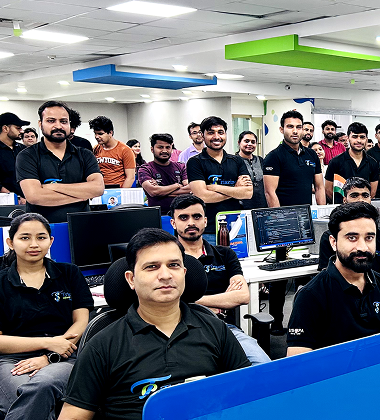
The decision framework for what to modernize, in what order, and how.
Read Guide