Why Your Legacy Systems Are Costing More Than You Think
There is a number your finance team almost certainly does not know: the true annual cost of your legacy application estate.
The visible line item, the maintenance contract, the hosting invoice, the support renewal is only part of the picture. The invisible costs are compounding: developer hours lost to fragile codebases, the security exposure of unpatched systems, the AI and analytics capabilities you cannot deploy because your data is trapped in 20-year-old architectures, and the talent you cannot retain because skilled engineers do not want to spend their careers babysitting COBOL.
According to Gartner and Deloitte, enterprises allocate between 60% and 80% of their entire IT budget just to maintain legacy systems. That leaves less than 30% for growth, new features, and innovation. McKinsey confirms that 70% of Fortune 500 companies are still running software developed over two decades ago. The U.S. government, in an extreme illustration of the same pattern, allocated 79% of its $105 billion IT budget to operations and maintenance rather than modernization.
The math is stark: you are spending the majority of your IT dollars to keep the lights on, not to move forward.
This guide is designed for enterprise decision-makers weighing that equation CTOs, IT directors, and digital transformation leaders who need a clear, honest picture of what legacy application modernization services involve, how to choose the right approach, and how to select a services partner who will deliver measurable outcomes rather than a drawn-out project.
What Legacy Application Modernization Services Actually Encompass
Legacy application modernization is frequently misunderstood, reduced to "moving to the cloud" or conflated with a simple software update. It is neither.
Legacy application modernization is the structured process of transforming outdated software systems to align with current architectures, security requirements, and business capabilities. This may involve updating the platform, rewriting the architecture, exposing functionality through modern APIs, or replacing the system entirely depending on the system's business criticality and the organization's strategic goals.
It is distinct from cloud migration in an important way: cloud migration is primarily a location change (moving an application to cloud infrastructure). Modernization is a structural change refactoring code and architecture to be cloud-native, scalable, and modular for long-term agility. Many organizations confuse the two and end up with legacy problems running on expensive cloud infrastructure.
Comprehensive legacy application modernization services typically include:
Portfolio Assessment and Roadmapping: A systematic inventory of your application estate, scored against business value, technical debt, and modernization complexity. This produces a prioritized roadmap not every system needs the same treatment, and a credible partner will tell you that upfront.
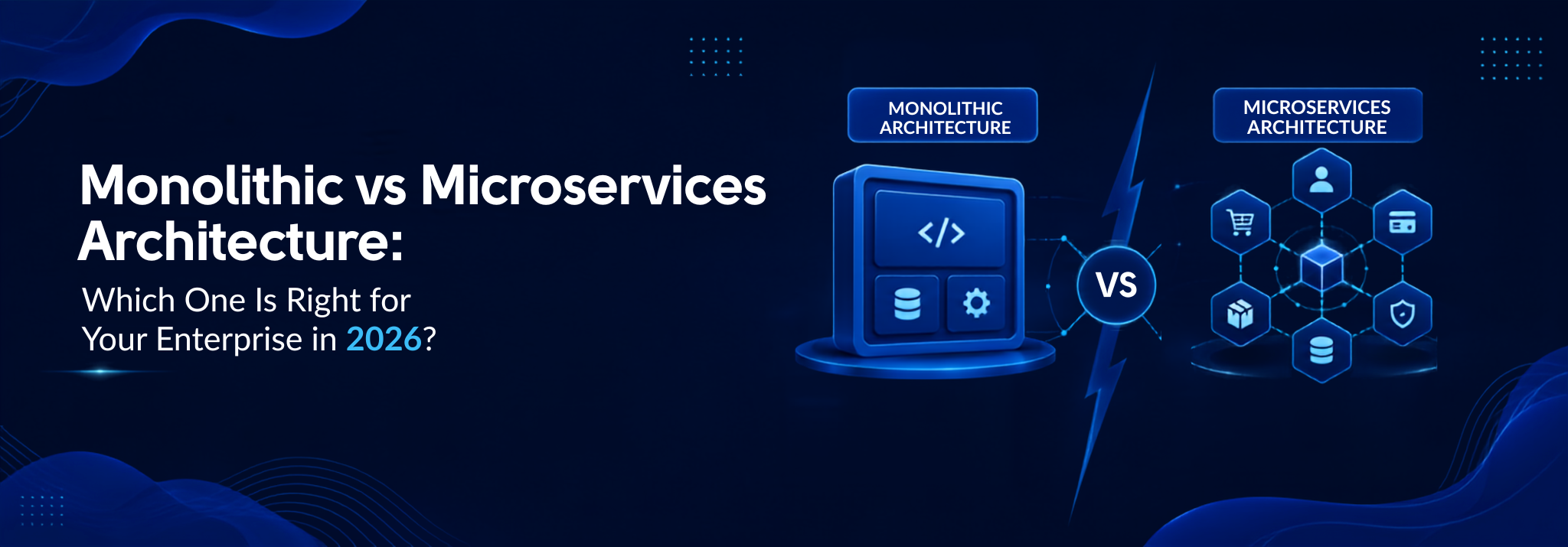
Application Architecture Modernization: Decomposing monolithic applications into loosely coupled microservices that can be deployed, scaled, and maintained independently. This is where most of the long-term agility value resides.
Cloud Migration and Replatforming: Moving applications to modern cloud infrastructure, with the appropriate level of optimization from lift-and-shift for non-critical workloads to full cloud-native refactoring for core systems.
API Modernization and Integration: Wrapping legacy interfaces with standardized, web- friendly APIs, unlocking data trapped in old systems and enabling integration with modern platforms, mobile applications, and third-party services.
Containerization: Packaging applications and their dependencies into portable containers, decoupling them from aging hardware and enabling consistent deployment across environments.
Data Modernization: Migrating legacy databases (VSAM, IMS, ISAM, IDMS) to modern relational, NoSQL, or cloud-based database platforms that support current analytics and AI workloads.
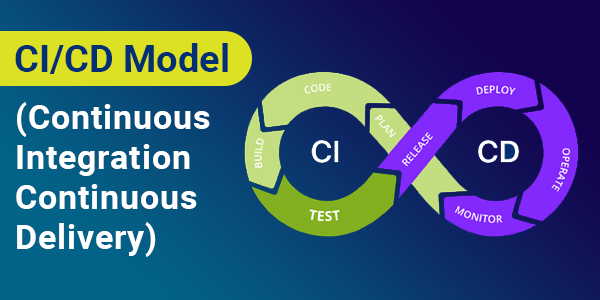
DevOps and CI/CD Modernization: Establishing modern development practices automated testing, continuous integration, centralized code repositories so that modernized systems can be maintained and enhanced efficiently going forward.
Ongoing Application Evolution: Post-modernization managed services, performance monitoring, and feature development to ensure systems continue to deliver value over time.
The Seven Modernization Strategies: Choosing the Right Approach
There is no single right answer in legacy application modernization. The strategy you choose should reflect the system's business criticality, the complexity of its existing architecture, your organization's risk tolerance, and your long-term goals. Here is a clear-eyed breakdown of the seven primary approaches:
1. Encapsulate (API-Enable)
What it is: The legacy system remains in place, but its data and functions are exposed through modern APIs, making them accessible to new applications and platforms.
Best for: Systems with stable, valuable functionality where the cost of replacement outweighs the benefit. Common in financial services, where core transaction systems are too critical and complex to replace quickly.
Trade-off: Ongoing maintenance costs of the legacy system continue. You gain connectivity without eliminating technical debt.
2. Rehost (Lift and Shift)
What it is: Applications are moved to cloud infrastructure with minimal changes. The same code, the same architecture, different hosting environment.
Best for: Non-critical applications where the primary goal is eliminating on-premises infrastructure costs and gaining cloud elasticity. Can be implemented in under seven months.
Trade-off: Misses most of the optimization value of modernization. Legacy architectural problems remain.
3. Replatform
What it is: The application is migrated to a modern runtime platform with minimal code modifications gaining cloud readiness and improved performance without a full rewrite.
Best for: Systems that are functionally sound but running on outdated or end-of-life platforms.
Trade-off: Limited architectural improvement. The application is better-housed but not fundamentally changed.
4. Refactor / Rearchitect
What it is: The code and architecture are restructured often decomposing a monolith into microservices without changing the external business behavior. This is the architectural engine of true modernization.
Best for: Core business applications where long-term agility, scalability, and integration matter. The highest ROI approach for systems critical to competitive differentiation.
Trade-off: More investment and time than rehosting or replatforming. Requires deep application knowledge and experienced architects.
5. Rebuild
What it is: The application is rewritten from scratch, preserving business logic and purpose but replacing the technical implementation entirely.
Best for: Systems where the existing architecture is so compromised that refactoring costs more than rebuilding common in legacy ERP, banking core systems, and insurance platforms.
Trade-off: Highest investment and longest time-to-value (often 18 months or more). Produces the most modern, adaptable result.
6. Replace
What it is: The legacy application is retired and replaced with a modern SaaS or commercial off-the-shelf (COTS) solution.
Best for: Applications providing commodity functionality that a commercial product can replicate reducing development cost while gaining vendor-maintained, regularly updated capabilities.
Trade-off: Least customizable. Requires careful process alignment and change management.
7. Retain and Archive
What it is: Some legacy systems providing exactly the functionality required with no need for integration or innovation are retained as-is, potentially archived to lower-cost storage.
Best for: Compliance and audit systems with static data needs. Not a modernization strategy so much as a deliberate decision to defer action.
A note on hybrid approaches: Most enterprise modernization programs combine strategies across the portfolio. A common pattern: rehost non-critical applications quickly to reduce infrastructure costs, while investing in full refactoring for core customer-facing or revenue-generating systems. The portfolio assessment phase is where these decisions should be made with financial rigor.
The ROI Case: What Modernization Actually Delivers
Modernization conversations stall when stakeholders view migration as a cost center. The documented outcomes from enterprise projects completed in 2025–2026 reframe that view clearly.
Cost Reduction: Organizations routinely report 25–35% reduction in infrastructure costs following modernization, with IBM research from real enterprise projects showing up to 74% reduction in combined hardware, software, and staffing costs. AWS migration data points to 66% infrastructure cost reduction. The industry-average breakeven on a well-executed modernization project is 18–30 months, with incremental, phased approaches reaching positive ROI in as little as 12–14 months.
Developer Velocity: Modern codebases are faster to change. Companies that modernize report up to 43% faster time-to-market for new features. Release cycles improve by 40–60%, because microservices architectures allow teams to deploy independently rather than coordinating monolithic releases.
Security Risk Reduction: Legacy systems cannot be patched quickly, instrumented properly, or isolated effectively during a security incident. IBM's 2026 Cost of a Data Breach Report puts the U.S. average breach cost at $10.22 million, a record high. Organizations running hybrid legacy-and-cloud architectures averaged $5.05 million per breach. Modernization reduces security breach risk by approximately 50%.
AI and Analytics Enablement: This is the business cost that has grown fastest in 2026. Generative AI adoption accelerated dramatically, and enterprises now deploy AI across customer service, predictive analytics, and process automation. Legacy systems built on batch processing and siloed databases cannot support AI workloads that require millisecond-latency data access and continuous model training. In 2026, the inability to adopt AI is no longer an abstract future risk it is a current competitive disadvantage.
Talent Retention: Engineers do not want to maintain 20-year-old architectures in languages few understand. By 2027, the majority of COBOL-era mainframe developers will have retired, with 60% already nearing retirement age. The knowledge they carry is often undocumented 42% of critical business logic in legacy systems is at risk when key personnel leave. Modernization removes this single-point-of-failure dependency.
Kyndryl's 2026 State of Mainframe Modernization survey documented ROI ranging from 288% to 362% for modernization initiatives, depending on the approach. Microsoft Azure studies document 228–304% ROI over three years for cloud modernization projects.
Common Mistakes That Derail Legacy Modernization Programs
The market is full of post-mortems from failed modernization projects. The failure modes are consistent:
Treating modernization as lift-and-shift. Moving legacy systems to the cloud without reoptimizing or rearchitecting them produces legacy problems at cloud prices. The system is now someone else's infrastructure problem, but your architectural debt remains entirely intact.
Modernizing without a portfolio strategy. Treating each application as an isolated project rather than part of a portfolio leads to duplication, missed integration opportunities, and inconsistent architecture. A modernization roadmap should be a portfolio-level document, not a system-by-system queue.
Underestimating knowledge transfer risk. Many legacy systems have no documentation the system is the documentation, and the people who understand it are nearing retirement. Successful modernization programs invest in knowledge extraction before the departure, not after.
Big-bang approaches over phased delivery. Full system replacements that run 18–24 months before any business value is delivered carry enormous risk organizational, technical, and financial. The best-performing modernization programs use incremental, phased approaches (the "strangler pattern") that deliver value continuously and allow course correction.
Skipping the assessment. Organizations that jump to implementation without a thorough portfolio assessment one that quantifies technical debt, maps integration dependencies, and scores business criticality consistently overrun on scope, timeline, and budget.
Selecting a partner for technical capability alone. Modernization succeeds or fails at the intersection of technology and business alignment. A partner who cannot connect architectural decisions to business outcomes will produce technically correct work that does not move the business forward.
How the AI-Assisted Modernization Shift Changes the Economics
One development deserves specific attention in 2026: the AI-assisted modernization tooling now available has fundamentally changed the cost and timeline mathematics of legacy modernization.
AI tools now automate the discovery, analysis, and documentation phases of modernization historically the most expensive parts of any project. The average cost of a COBOL modernization project dropped from $9.1 million in 2025 to $7.2 million in 2026, a 21% reduction in a single year, primarily attributable to AI tooling compressing the discovery and translation phases.
Projects that would have required 18 months traditionally can now be delivered in 5 to 7 months with AI-assisted approaches. This changes the ROI math significantly: projects that were previously borderline now have a credibly shorter payback window.
However, AI assistance does not eliminate the need for experienced human judgment. Developer trust in AI output accuracy for high-stakes code is appropriately scrutinized AI tools accelerate the work, but experienced architects and engineers must validate outputs, particularly for business-critical systems where an automated code translation that preserves syntax but misses semantic meaning can introduce subtle errors that are expensive to find post-deployment.
At Triazine Software, we integrate AI-assisted tooling into our modernization engagements to accelerate assessment, code analysis, and documentation while applying experienced architect oversight to all transformation decisions.
A Practical Framework for Building Your Modernization Business Case
For enterprise decision-makers who need to secure internal approval for a modernization initiative, the following framework organizes the financial case:
Step 1: Quantify the current cost of inaction. Calculate your total legacy burden, not just the maintenance invoice. Include: annual maintenance and support spend, developer hours spent on legacy friction (multiplied by fully-loaded cost), estimated security breach risk exposure (probability × average cost), and delayed features multiplied by estimated revenue per feature.
Enterprises running 10–15 legacy applications typically carry $400,000–$800,000 in direct annual maintenance costs before talent, productivity, or risk exposure enters the picture.
Step 2: Score your portfolio. Map every application against two dimensions: business value (how critical is this to revenue, compliance, or competitive differentiation?) and technical debt (how expensive is it to maintain and change?). This produces a prioritized modernization roadmap and helps sequence investments.
Step 3: Model the modernization ROI. Use the formula: Annual legacy cost savings + Revenue uplift ÷ Modernization investment. The industry average breakeven is 18–30 months; phased approaches can reach positive ROI in 12–14 months. Include both immediate cost reduction and strategic value AI enablement, faster time-to-market, reduced breach risk.
Step 4: Choose the right strategy for each system. Not every application warrants the same investment. Apply the seven strategies outlined above based on each system's position on the value/debt matrix.
Step 5: Define governance and success metrics before you start. Agree on how success will be measured: infrastructure cost reduction, release frequency, mean time to recovery, security posture improvement, developer satisfaction. Modernization programs without defined metrics drift; those with them deliver.
What to Look for in a Legacy Application Modernization Services Partner
With the legacy modernization market growing toward $57 billion by 2030, the number of vendors positioning themselves as modernization specialists has grown accordingly. Not all of them bring the same depth or approach. Here is what separates capable partners from vendors who are good at selling engagements:
Portfolio-first thinking: The right partner begins with assessment and roadmapping, not implementation. Be cautious of any vendor who recommends a specific approach before thoroughly understanding your application landscape.
Domain-specific experience: Legacy modernization in financial services is materially different from modernization in healthcare or manufacturing. A partner who understands the regulatory environment, integration complexity, and risk profile of your industry will navigate obstacles that a generalist will stumble into.
Transparent methodology: Ask specifically: What does your assessment process produce? How do you handle knowledge extraction from systems with no documentation? How do you phase delivery to ensure business value before the full engagement concludes?
AI-assisted tooling: AI-accelerated discovery and code analysis is now a standard capability for credible modernization partners. A partner not using these tools is working with the economics of 2022.
Post-modernization continuity: Modernization is not a one-time event, it is a capability shift. The right partner structures engagements to build internal team capability alongside delivering the modernized system, so your organization can continue to evolve it.
References in comparable complexity: Ask for references from clients with a similar scale of legacy estate, not just clients who completed a single-system migration.
Triazine Software's Legacy Application Modernization Services
At Triazine Software, we specialize in helping mid-to-large enterprises transform aging application portfolios into modern, scalable, and AI-ready architectures without the disruption and risk of big-bang replacements.
Our approach is built on four principles that distinguish our engagements:
Assessment before prescription. Every engagement begins with a thorough portfolio assessment mapping technical debt, business criticality, integration dependencies, and modernization feasibility across your entire application estate. You receive a prioritized roadmap with a clear financial justification before a single line of code changes.
Phased, value-first delivery. We structure modernization programs to deliver measurable business value in the early phases often within the first 90 days rather than asking you to fund 18 months of work before seeing results. This protects your investment and builds organizational confidence.
AI-accelerated delivery. Our engineering teams use AI-assisted analysis and code transformation tooling to compress discovery timelines and reduce project cost, passing those savings directly to clients in faster delivery and lower total engagement cost.
Full-lifecycle ownership. We do not hand off a modernized system and disappear. Our managed services offering provides ongoing evolution, performance monitoring, and feature development so your modernized applications continue to deliver value as business requirements change.
Our core service areas include:
- Legacy portfolio assessment and modernization roadmapping
- Monolith-to-microservices architecture transformation
- Cloud migration and replatforming (AWS, Azure, Google Cloud)
- API modernization and integration layer development
- Database migration and data modernization
- DevOps and CI/CD pipeline implementation
- Mainframe and COBOL modernization
- Post-modernization managed services
We work primarily with enterprise clients in financial services, healthcare, manufacturing, and technology industries where legacy complexity is highest and the cost of inaction is most acute.
Frequently Asked Questions
How long does legacy application modernization take?
It depends heavily on scope and approach. A rehosting project can be completed in under seven months. A full refactor of a core enterprise application typically takes 12–18 months. A complete rebuild can run 18 months to several years. Phased programs that modernize the portfolio incrementally prioritizing the highest-value systems first deliver ROI much faster than big-bang approaches. With AI-assisted tooling, projects that previously required 18 months can often be delivered in 5–7 months.
What does legacy application modernization cost?
Costs range widely based on system complexity, modernization strategy, and portfolio scope. Organizations can expect to spend anywhere from $100,000 for a contained replatforming project to several million dollars for a full enterprise portfolio transformation. The more useful framing is total cost of ownership: most enterprises find that the cost of a well-executed modernization pays back within 18–30 months when measured against the full burden of legacy maintenance, security risk, and opportunity cost.
Is it better to modernize or replace a legacy application?
There is no universal answer. Replacement is the right choice when the application provides commodity functionality that a commercial SaaS solution can replicate, saving development cost while gaining vendor-maintained capabilities. Modernization is the right choice when the application contains proprietary business logic, unique workflows, or data that is core to competitive differentiation. A thorough portfolio assessment will help you make this determination for each application with financial rigor rather than intuition.
How do we manage risk during a modernization program?
The most important risk control is phased delivery. The strangler fig pattern incrementally replacing legacy components with modern ones while keeping the system operational is the industry-standard approach for managing risk in complex modernization programs. It allows you to validate the modernized components in production before fully retiring the legacy system, and to course-correct without unwinding months of work.
Will AI replace the need for legacy modernization services?
No but it is accelerating delivery and reducing cost. AI-assisted tooling automates the discovery, analysis, and code documentation phases that historically consumed the largest share of modernization budgets. However, experienced architects and engineers remain essential for making strategic decisions, validating automated outputs, and ensuring that modernized systems actually align with business requirements rather than simply replicating legacy behavior in a new language.
Get Started: Schedule a Legacy Portfolio Assessment
If you recognize your organization in the patterns described in this guide IT budgets dominated by maintenance, teams blocked from innovation, AI initiatives stalled by legacy infrastructure the right first step is a clear picture of your actual legacy burden.
Triazine Software offers a complimentary Legacy Portfolio Assessment for qualified enterprise clients. In a structured engagement, our architects will:
- Map your application estate against business value and technical debt
- Quantify the true annual cost of your legacy systems, including the costs that do not appear on the maintenance invoice
- Identify the highest-priority modernization opportunities with the strongest ROI
- Deliver a phased modernization roadmap with financial modeling
There is no obligation and no sales pitch, just a clear, expert view of where your legacy estate stands and what modernization would realistically cost and deliver. Most clients leave the assessment with a business case they can take to their board.
The cost of delay compounds quarterly. The organizations that moved on legacy modernization in 2026 are now deploying AI, accelerating releases, and reallocating maintenance budgets to growth. The ones that waited are still paying for systems their competitors have already replaced.



































 Get free quote