
At a glance
The engagement
About the client
Anchal
Anchal is a maternal and child health platform built for a state government antenatal programme. The programme supports pregnant women from registration through pregnancy, childbirth and childcare up to the age of five, connecting beneficiaries with health workers, government benefit transfers, health services and educational health content. State government maternal programmes operate at significant scale, with thousands of health workers managing cases across districts and the data feeding directly into public health planning and programme administration.
The business challenge
One platform. Three user groups. State-government scale.
Running a maternal health programme at state scale involves significant coordination across three groups who all need different things from the platform. Pregnant women in rural and semi-urban areas need a simple, accessible experience for registration, appointment reminders and benefit tracking. Health workers managing hundreds of cases need fast data entry, high-risk flagging and clear caseload visibility. Government administrators need district and state-level programme analytics without waiting for periodic manual reporting cycles.
Building a single system that works well for all three simultaneously is the design challenge. Add to that the requirement for direct benefit transfer tracking linked to health milestones, multilingual accessibility for a diverse beneficiary population, and compliance with Indian health data protection standards, and the scope of the platform becomes clear.
What Triazine Software built
One journey. Beneficiaries, workers and administrators.
Triazine Software built Anchal across web and mobile self-registration and pregnancy dashboards for beneficiaries, milestone-linked benefit transfers, and caseload tools with real-time analytics for health workers and administrators.
A beneficiary journey that starts with self-registration
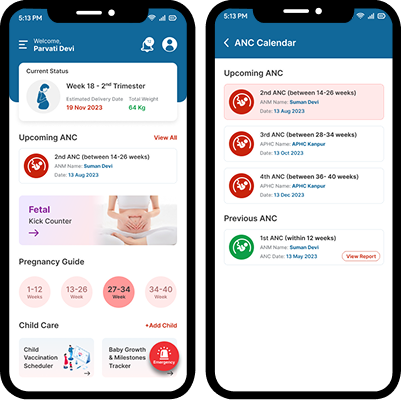
Pregnant women register through a self-registration flow with KYC verification, creating a beneficiary profile that follows them through the full programme. From that profile they access a personalised pregnancy dashboard with health tracking, trimester-specific reminders, emergency connectivity and educational content covering pregnancy and childcare up to the child's fifth year.
- Self-registration with KYC creating a profile that follows the beneficiary through the full programme
- Personalised pregnancy dashboard with health tracking and trimester-specific reminders
- Emergency connectivity built into the beneficiary experience
- Educational content covering pregnancy and childcare up to the child's fifth year
Benefit transfers linked to health milestones
Direct benefit transfer eligibility and government scheme tracking are integrated into the beneficiary journey, linking health milestones to benefit entitlements and keeping both the beneficiary and the health worker informed of transfer status. The content management layer allows programme administrators to push health guidance, notifications and updated materials to the full beneficiary population.
- DBT eligibility & scheme tracking integrated into the beneficiary journey
- Milestone-linked entitlements health milestones connected to benefit status
- Shared visibility beneficiary and health worker both see transfer status
- Content management administrators push guidance and notifications to the full population
Caseload tools for health workers, real-time analytics for administrators
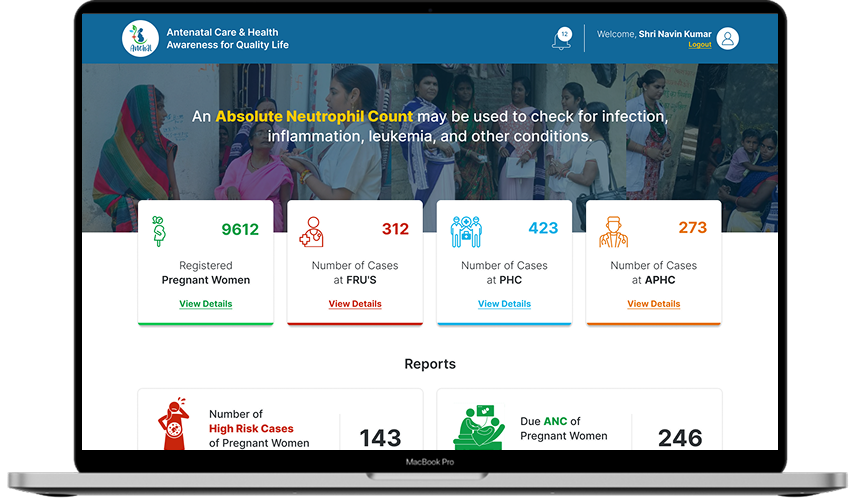
Health workers have a dedicated interface for managing caseloads, monitoring beneficiary health data, communicating with registered women, flagging high-risk cases for escalation and tracking progression across trimesters and into the childcare period. The analytics layer gives district and state administrators real-time visibility into programme performance, registration numbers, active cases and health worker activity.
- Caseload management with beneficiary health data and direct communication
- High-risk flagging with escalation workflows built in
- Progression tracking across trimesters and into the childcare period
- Real-time analytics registrations, active cases and health worker activity at district and state level
Business outcomes
Beneficiaries registered. Cases managed. One platform.
Verified outcomes only programme metrics from Anchal at documentation date.
◈For beneficiaries and programme delivery
Over 9,600 pregnant women are registered on the Anchal platform with 312 active cases being managed by health workers at the time of documentation. Beneficiary registration, health tracking, appointment reminders and direct benefit transfer tracking all run through one system, giving health workers and administrators consolidated real-time programme visibility.
◎For health workers and administrators
Health workers manage full caseloads through the platform with high-risk case flagging and escalation workflows built in. Programme administrators have district and state-level visibility into registrations, active cases and health worker activity without waiting for manual reporting cycles. The childcare management layer extends the platform's value through the first five years of a child's life.
Technology landscape
Built for state-scale maternal programmes.
Anchal was built across Android-primary mobile and web with government-compliant cloud deployment, DBT integrations and multilingual support.
Enterprise security & compliance
Built for secure, compliant healthcare operations.
Healthcare platforms manage highly sensitive patient information that demands the highest standards of security, privacy and regulatory compliance. From patient records and clinical interactions to appointment history and medical documentation, every data point must be protected throughout its lifecycle.
For Anchal, Triazine Software designed security and compliance as part of the platform architecture from the start, not configured after delivery. The solution follows industry best practices for protecting healthcare data while supporting regulatory requirements across different markets.
Data Encryption
Protects patient information during transmission and storage using industry-standard encryption protocols.
Role-Based Access Control
Ensures doctors, caregivers, administrators and patients only access information relevant to their responsibilities.
Consent Management
Captures and manages patient consent for healthcare services and personal data processing.
Audit Trails
Maintains complete activity logs to support governance, investigations and regulatory audits.
Secure Authentication
Strong user authentication safeguards access to patient and operational systems.
Scalable Security Architecture
Designed to support enterprise deployments across hospitals, clinics and distributed healthcare networks.
Compliance-ready foundation
The platform architecture is designed to support leading healthcare and data privacy standards, depending on deployment geography and customer requirements.
HIPAAUnited States
HIPAA for healthcare organisations operating in the United States.
DPDP ActIndia
Digital Personal Data Protection Act for organisations operating in India.
UK GDPRUnited Kingdom
UK GDPR for healthcare providers serving the United Kingdom.
CMMI L3Enterprise delivery practices
Enterprise delivery practices aligned with CMMI Level 3 to ensure disciplined development, quality assurance and governance.
Beyond go-live
A platform that scales with the programme.
Triazine Software built the Anchal platform from architecture through to deployment across web and mobile. The platform is live and supporting the state government maternal health programme. As the programme expands to additional districts and the registered beneficiary population grows, the platform scales with it.
Related success stories
More from Healthcare & Digital Health.
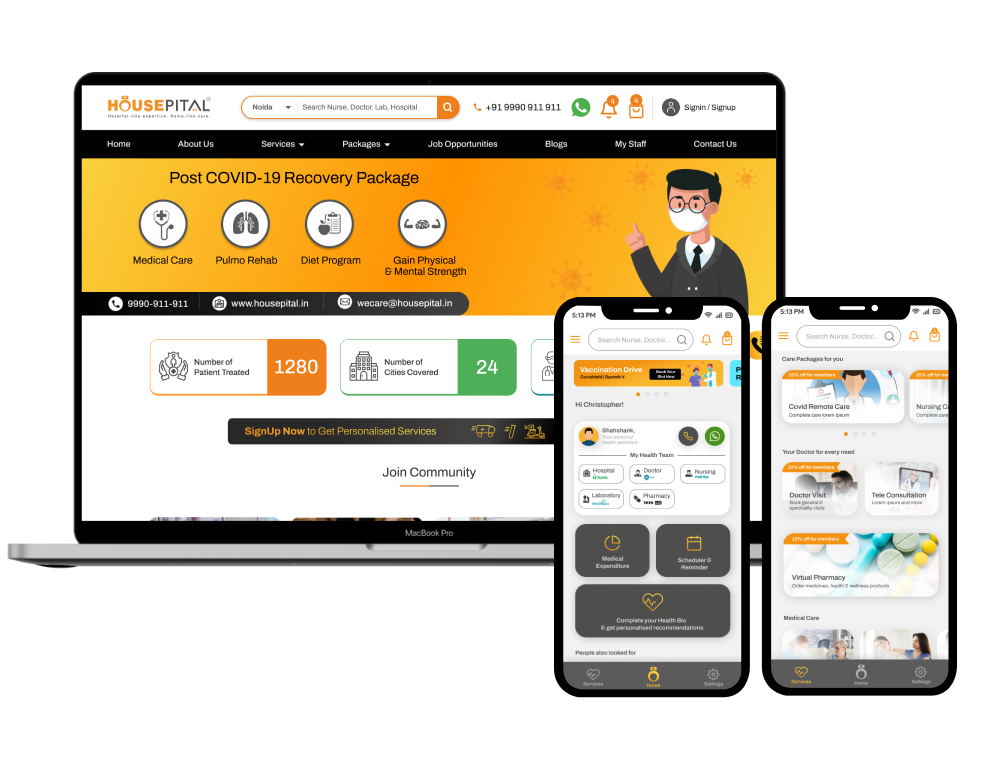
Housepital
Digital home healthcare ecosystem.
View case study →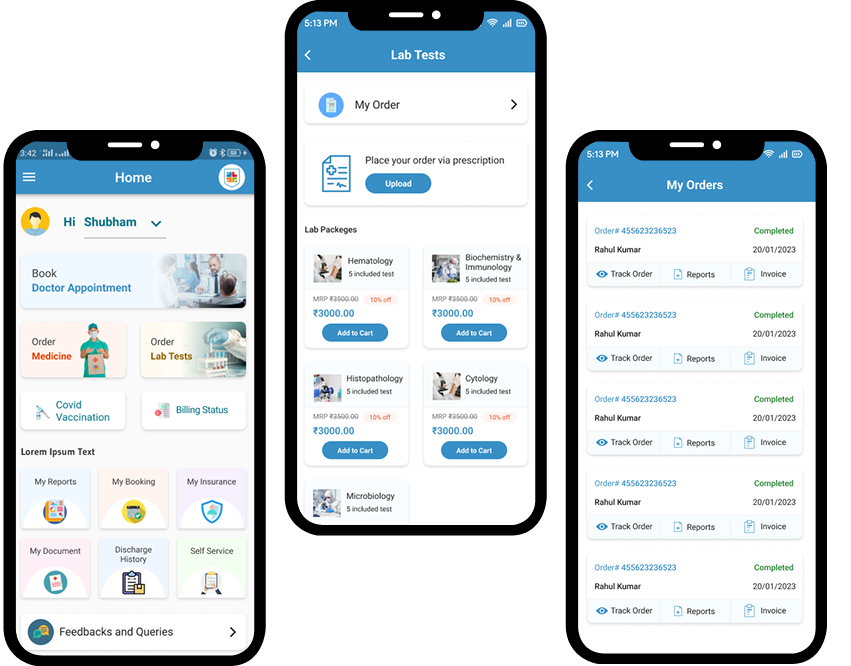
Sarvodaya Hospital
Patient management system.
View case study →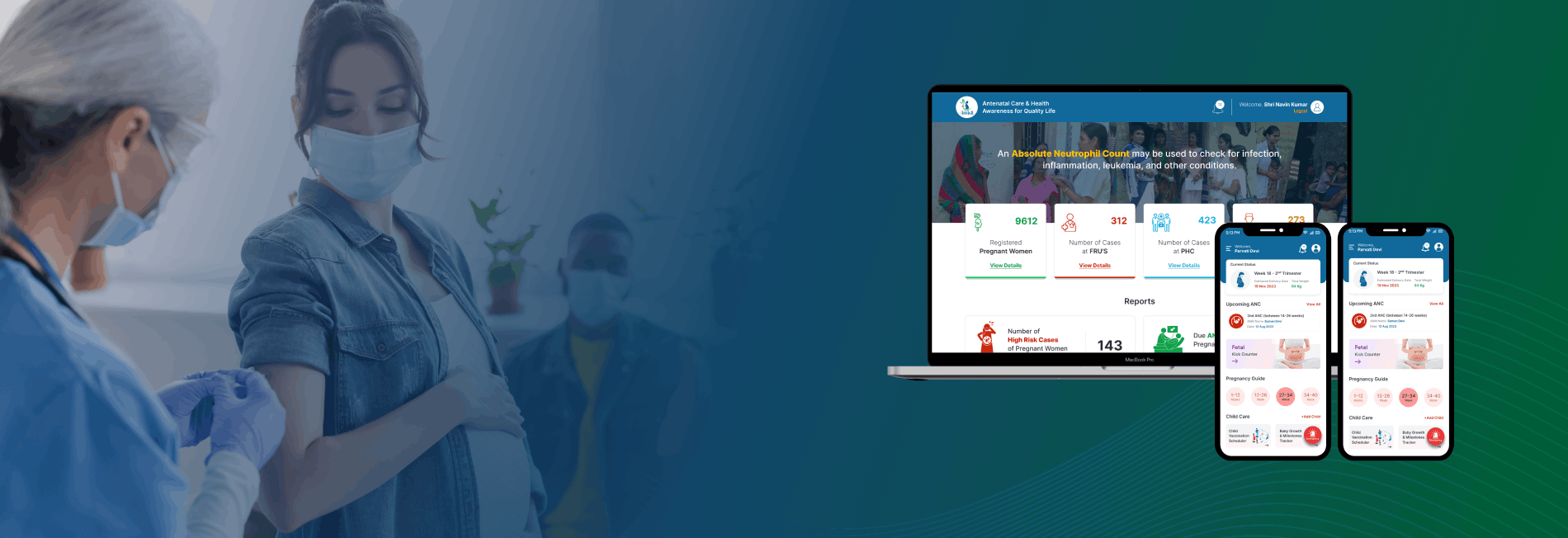
Healthcare & Digital Health All Projects
Explore every platform Triazine has delivered across the healthcare vertical.
View all projects →Work with Triazine Software
Let's build your next enterprise platform.
From government maternal health programmes to home care and hospital systems, Triazine designs and delivers digital health infrastructure that public programmes and providers run their operations on secure, compliant and built to scale.