
Future Trends in Custom ERP Software Development for 2026 and Beyond
The way businesses operate is changing faster than ever. As companies expand, adopt digital tools, and manage large volumes of data, the need for flexible and intelligent ERP systems is becoming unavoidable. This is exactly why custom ERP software development has become a priority for organizations in every industry.
Businesses no longer want a rigid, one-size-fits-all ERP solution. They want custom ERP software that fits their internal processes, supports future expansion, and integrates seamlessly with the systems they already use. And as we step into 2026 and beyond, this demand will grow even faster.
In this blog, we'll break down the major trends shaping custom ERP development, why companies are upgrading their ERP systems, and what the future of business management software looks like — in simple, easy-to-read language.
Why Custom ERP Software Matters More Than Ever
Companies today face real challenges: managing multiple departments, tracking operations, making data-driven decisions, controlling costs, and improving efficiency. Traditional ERP systems are powerful, but they often force companies to adjust their processes to fit the software.
This is the biggest reason why more organizations are shifting to custom ERP software development. With a custom-built solution, everything works the way your business operates — not the other way around.
A custom ERP system can handle
- Finance and accounting
- HR and payroll
- Inventory and supply chain
- Sales and CRM
- Production and manufacturing
- Compliance and audit
- Field operations
- Asset management
And as your company grows, the ERP grows with you.
Trend 1: AI and Machine Learning Will Become Core to Custom ERP Software
AI is no longer optional. Companies expect ERP systems to not just store data, but also analyze it and suggest smarter ways of working.
In 2026 and beyond, custom ERP development will focus heavily on AI-driven features such as
- Predictive analytics for forecasting
- Automated decision support
- Demand prediction for supply chain
- Smart inventory management
- Automated approval workflows
- Fraud detection
- Personalized dashboards for each department
AI allows businesses to reduce manual work, avoid errors, and make faster decisions. Many ERP systems are already using AI to recommend ideal stock levels, alert managers about risks, or highlight unusual financial entries.
The companies investing in custom AI-enabled ERPs today will gain a long-term competitive edge.
Trend 2: Integration-First ERP Architecture
Modern businesses use dozens of tools: CRM systems, HR software, financial tools, IoT devices, BI dashboards, and more.
In 2026, companies will expect their custom ERP software to integrate smoothly with
- Accounting platforms like Tally, QuickBooks, SAP
- E-commerce platforms
- CRM tools
- IoT and automation systems
- Machine monitoring devices
- Legacy systems
- Warehouse systems
- BI and analytics tools
A good custom ERP software development partner will design a system with open APIs, allowing real-time data movement throughout the organization.
This reduces data silos and saves huge amounts of manual effort.
Trend 3: Mobile-First ERP Usage Will Become Standard
Employees today aren't always at their desks — they're on the field, on shop floors, at remote sites, or traveling.
This is why future ERP systems will offer
- Mobile dashboards
- Approval workflows on mobile
- Attendance and HR access
- Inventory tracking
- Field staff reporting
- Real-time alerts and notifications
Custom ERPs will be fully mobile-ready, enabling teams to take quick action from anywhere. Mobility will shift ERP systems from being operational tools to real-time performance management systems.
Trend 4: Cloud-Based ERP Adoption Will Surpass On-Premise
Cloud ERP is already growing rapidly, and by 2026 it will dominate the market.
Businesses prefer cloud-based custom ERP software because
- No expensive hardware
- Lower maintenance cost
- Faster deployment
- Easy scaling
- Remote access
- Higher uptime
- Better data security
Cloud-based solutions also make upgrades easier. Your ERP grows with your business, without requiring major IT changes.
Trend 5: Hyper-Personalized ERP Dashboards
Companies want ERP dashboards that are relevant to each user's daily tasks.
For example:
- A CEO wants financial dashboards and KPIs
- A warehouse manager wants stock alerts
- A finance manager wants receivables/payables
- A sales team wants performance analytics
In the future, custom ERP development will focus on:
- Role-based dashboards
- Personalized widgets
- Customizable reports
- Department-level automation
This level of personalization increases usage and improves the decision-making process.
Trend 6: Low-Code and No-Code ERP Extensions
Businesses often need quick changes in their ERP, like a new workflow, a new approval process, or a new report.
Waiting months for developers slows business down.
This is where low-code and no-code ERP modules will dominate.
Companies will want:
- Drag-and-drop workflow creation
- Simple form builders
- Custom report generators
- Quick automation setup
- Department-level configuration
With low-code customizations, businesses move faster without breaking the ERP's structure.
Trend 7: Advanced Data Security and Compliance
Cybersecurity threats are increasing globally, and ERP systems hold the most sensitive business data
Future custom ERP software will include:
- Role-based access layers
- Multi-factor authentication
- Data encryption
- Automated backups
- Audit trails
- Secure API gateways
- Compliance-ready frameworks
- Disaster recovery plans
Companies in sectors like BFSI, Oil & Gas, Manufacturing, Healthcare, and Telecom will particularly benefit from security-focused ERP systems.
Trend 8: IoT-Enabled ERP Systems
IoT (Internet of Things) is transforming industries like energy, utilities, manufacturing, logistics, and retail.
Future ERP systems will integrate directly with IoT devices to track:
- Machine performance
- Fuel consumption
- Pipeline or plant operations
- Temperature or humidity
- Vehicle movement
- Inventory levels
- Safety alerts (especially in CGD / Utility industries)
This allows businesses to make real-time decisions and prevent breakdowns before they occur.
Trend 9: Industry-Specific Custom ERP Development
Companies no longer want generic ERP systems. They want ERPs that understand their industry workflows.
This is why future ERPs will be built for:
- Oil and Gas / CGD (Permit to Work, Incident Reporting, Asset Management)
- FMCG (Secondary Sales, Distributor Management, Inventory Forecasting)
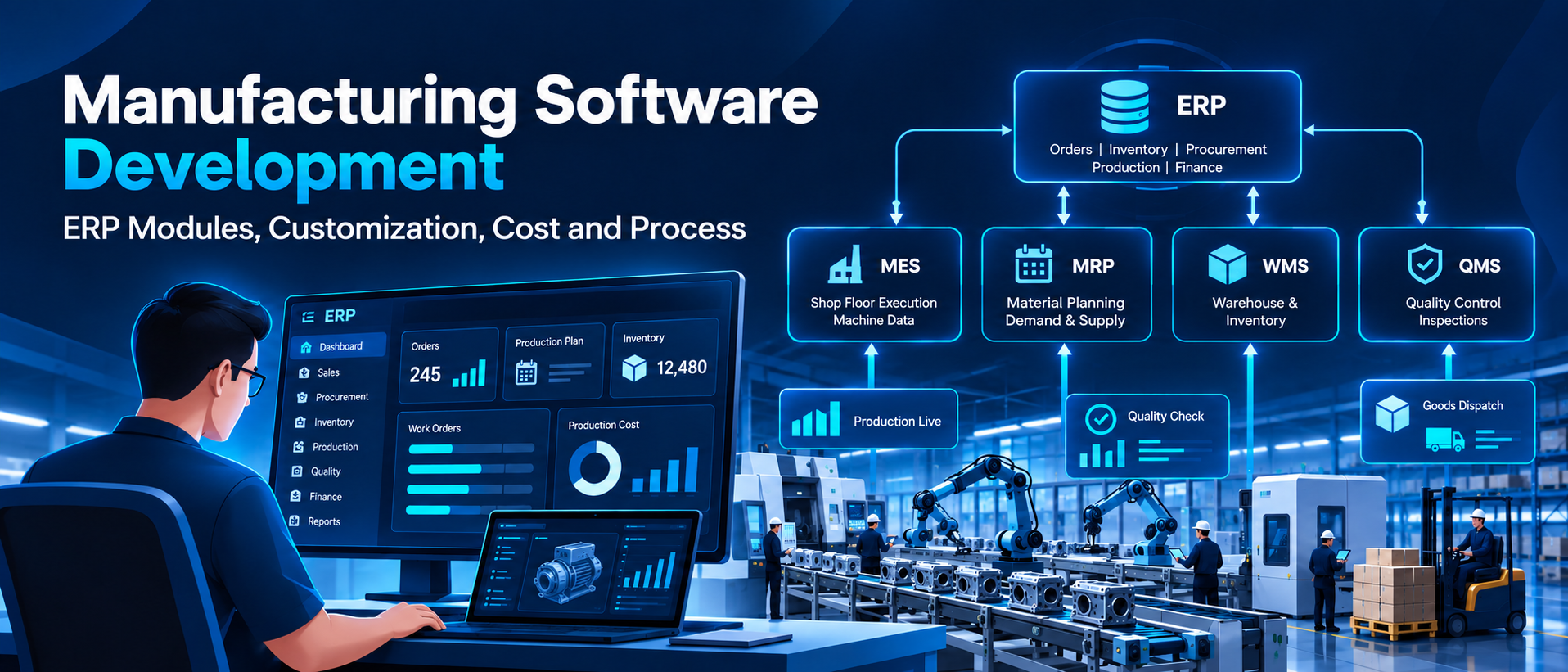
- Manufacturing (Machine Monitoring, Production Planning)
- BFSI (Loan Origination, Credit Scoring, Compliance)
- Retail (Omnichannel Management, Order Tracking)
- Healthcare (Patient Data, Asset Tracking, Billing)
A strong custom ERP software development partner like Triazine Software already designs industry-specific solutions tailored to operational challenges.
Trend 10: Automation and Smart Workflows Will Replace Manual Tasks
Automation will be one of the biggest drivers of ERP innovation.
Future ERPs will automate:
- Approvals
- Email notifications
- Job assignments
- Data entry
- Report creation
- Compliance workflows
- Payroll and HR
- Inventory updates
This reduces human error and improves efficiency across departments.
Trend 11: Real-Time Data Visualization and BI Tools
Decision-making will increasingly depend on analytical insights.
Future ERP systems will come with:
- Real-time analytics
- BI dashboards
- Predictive forecasting
- KPI tracking
- Data visualization tools
Companies will no longer rely on monthly reports. Instead, they'll see everything live — sales, inventory, finance, production, and customer activity.
Final Thoughts: The Future of Custom ERP Software Development
The future of ERP systems is flexible, intelligent, scalable, and built around your business needs. Companies are moving away from rigid traditional software and investing in custom ERP software, because it gives them total control over how their operations work.
By choosing the right partner for custom ERP software development, businesses get:
- A system built around their workflows
- Long-term scalability
- Better security
- Stronger data insights
- Smooth integration with existing tools
- Faster decision-making
- Improved operational efficiency
As a leading technology partner, Triazine Software has deep expertise in custom ERP development, system integration, analytics, and automation. With 12+ years of experience, 500+ projects delivered, and proven digital transformation success across industries, Triazine Software helps businesses build future-ready ERP systems that support long-term growth.
If you're planning to upgrade or build a new ERP system in 2026 and beyond, now is the right time to start.
Want a future-ready custom ERP for your business? Triazine can help you design, build, and scale it with confidence.









































 Get free quote