Custom Healthcare Software Development: Cost, Process, Compliance and Examples
Custom healthcare software development is the process of designing and building medical software around one organization's clinical workflows, compliance duties and existing systems, instead of bending those workflows to fit a packaged product. It covers everything from a hospital management system or EHR to a telemedicine app, a remote monitoring platform or a state-level health programme.
Most healthcare leaders don't start by asking whether to build software. They start with a narrower problem. Appointments live in one system, lab results in another, billing in a third, and the patient has to be the integration layer. Or a clinic network has outgrown a product that can't be configured to match how its doctors actually work.
This guide is written for the people who have to make that decision: hospital CIOs, digital health founders, programme heads and product owners. It covers what custom healthcare software really involves, when building beats buying, what the rules look like in the US, UK, EU, India, UAE and beyond, what it costs in 2026, and how to pick a partner who won't leave you with a compliance headache.
Who This Guide Is For
- Healthcare CIOs and IT directors
- Hospital and clinic groups
- Digital health startups
- Healthcare product owners
- Government health programmes
- Organizations replacing legacy healthcare systems
This article provides general product-planning information, not legal, regulatory, clinical or compliance advice. Requirements depend on your product's intended use, data flows, jurisdictions, customers and deployment model.
Key Takeaways
- Build custom when a packaged product can't meet your workflows, integrations, or compliance needs. As a rough heuristic, buy when a proven product covers most of your critical workflows without unsafe workarounds.
- Compliance is an architecture decision, not a testing phase. HIPAA, GDPR, India's DPDP Rules and similar laws shape your data model, access control and audit logging from day one. No vendor can guarantee compliance on its own, because it depends on how the product is deployed and operated.
- Plan for FHIR-based interoperability from the start. Retrofitting APIs later is one of the most expensive mistakes in healthcare software.
- Planning-level 2026 budgets run from roughly $40,000 for a focused patient portal to $500,000 or more for a multi-facility platform. As planning assumptions, regulated work can add 15 to 25% to a comparable non-regulated build, and yearly maintenance often lands in a similar range.
- The strongest partners show domain experience, named case studies with real numbers, and a security and compliance approach you can inspect.
What is custom healthcare software development?
Custom healthcare software development means building software specifically for a healthcare organization, rather than licensing a general product and configuring it. The software is designed around how your clinicians, administrators, and patients actually work, and it connects to the systems you already run.
The scope is wider than most people expect. It includes:
- Clinical systems: EHR and EMR platforms, hospital management systems, clinical decision support
- Patient-facing products: patient portals, telemedicine, mobile health apps, appointment and reminder tools
- Connected care: remote patient monitoring, wearable and device integrations
- Operations and finance: revenue cycle management, medical billing, inventory, staff scheduling
- Diagnostics: laboratory information systems, imaging workflows
- Programme platforms: community health, maternal care, screening and government health schemes
- Integration and data: interoperability layers, analytics and reporting
Healthcare software development services usually span the whole lifecycle: discovery, design, engineering, testing, compliance work, launch and long-term support.
Market context
For scale, Grand View Research's third-party forecast puts the global digital health market at USD 347.4 billion in 2025, reaching USD 1,830.4 billion by 2033, a compound annual growth rate of 23.4% from 2026. These are analyst projections, not audited totals, so treat them as directional.
Custom vs off-the-shelf healthcare software
Neither option is always right. The honest answer depends on how unusual your workflows are and how much control you need.
| Factor | Off-the-shelf product | Custom software |
| Workflow fit | You adapt to the product | The product adapts to you |
| Time to first use | Weeks | Months (an MVP can ship sooner) |
| Upfront cost | Lower, usually subscription | Higher, one-time build plus maintenance |
| Integrations | Limited to what the vendor supports | Built around your existing systems |
| Compliance ownership | Shared with the vendor | Designed in for your jurisdictions |
| Roadmap control | Vendor decides | You decide |
| Long-term cost | Recurring subscription and module costs | Build cost plus infrastructure, maintenance, support and future development |
When custom software makes sense
Building tends to pay off when at least two of these are true:
- Your clinical or operational workflow is specific enough that packaged products need heavy workarounds.
- You have to connect several existing systems, such as a lab system, a pharmacy platform, a billing tool and a state or national health registry.
- You operate under more than one regulatory regime and need to handle data differently in each.
- The software is your product, meaning you plan to sell it, license it or build a business on it.
- You need to own the data model and the long-term roadmap.
When buying is the smarter move
As a rough heuristic, buying makes more sense when a proven product already covers most of your critical workflows without unsafe workarounds. A small clinic that needs scheduling and billing rarely needs a bespoke platform. A common middle path is to buy a core system and build custom modules and integrations around it.
A simple decision framework
| If your priority is... | Consider... |
| Fast deployment and standard workflows | Off-the-shelf software |
| A unique clinical workflow | Custom software |
| Multiple disconnected systems | An integration platform or a custom integration layer |
| A product you plan to sell | Custom product development |
| Legacy replacement with operational risk | Phased modernization |
Types of custom healthcare software
Here are the categories we see most often, with what makes each one tricky to get right.
Hospital management and patient management systems
These cover OPD and IPD workflows, appointments, lab ordering, pharmacy, billing and digital health records. The hard part is unifying departments that have always run on separate tools. Triazine built this kind of platform for a multi-speciality hospital, bringing appointments, labs, pharmacy and billing into one patient management system with role-based access for clinical and administrative staff.
Patient portals, telemedicine and mHealth apps
Patients expect to book, pay, message their doctor and see results from a phone. The engineering work sits in secure video, identity and consent, notification reliability and deep integration with the record system. If you're building these, healthcare app development discipline and solid mobile app development practice matter as much as healthcare knowledge, because adoption lives or dies on the app experience.
Remote patient monitoring and connected devices
RPM platforms collect vitals from wearables and connected devices and alert clinicians when readings cross thresholds. Device integration and alert logic drive the cost. Alert fatigue is a real clinical risk, so thresholds need clinician input, not just developer guesses.
Revenue cycle and billing software
Medical billing depends on coding standards, payer rules and clean data exchange. Custom RCM makes sense when your payer mix or workflow doesn't fit standard products, but the payer-specific rules make it one of the more detailed builds.
Laboratory, diagnostics and imaging software
Lab and imaging systems tie into instruments and standards such as HL7 and DICOM. If the software analyses images or device signals for a medical purpose, it may fall under medical device regulation (more on that below).
Care coordination and home healthcare platforms
When one patient needs a doctor visit, a caregiver and equipment delivery from three providers, coordination becomes the product. Triazine built Housepital, an on-demand home healthcare platform that has treated over 30,200 patients across 24+ clinics, using a single unified care record. As a result, every clinician and caregiver sees the same context.
Public health and community programme platforms
Government and NGO programmes have different constraints: scale, low connectivity and benefit tracking. Triazine's Anchal platform supports a state antenatal and child health programme, replacing paper-based tracking with real-time case visibility for health workers (9,612 pregnant women registered and 312 active cases at the time of documentation). Healium Camps digitizes health camp planning, field data capture and post-camp reporting, with mobile-first data entry that works without a constant connection.
Mental health and wellness platforms
These carry the highest privacy stakes: secure one-to-one chat, practitioner networks and moderated communities. Lyfe by TTM is a mental health platform built with role-based access and secure communication as core requirements.
AI-assisted clinical and operational tools
Ambient documentation, triage support, denial prediction and forecasting are the fastest-moving categories. They also bring the newest regulatory questions, covered in the AI section below.
Compliance and regulation: what shapes your build
Compliance is where healthcare software projects most often go off track. The rule of thumb: identify every jurisdiction your data touches before you write a line of code, then design for the strictest one.
This section is a practical overview, not legal advice. Confirm requirements with qualified counsel in each market.
| Market | Key rules | What it means for the build |
| United States | HIPAA Privacy, Security and Breach Notification Rules; 21st Century Cures Act; FDA oversight of device software; CMS interoperability rules | Business Associate Agreements, encryption, access controls, audit logs, patient data access APIs |
| United Kingdom | UK GDPR, Data Protection Act 2018, NHS assurance expectations | Lawful basis for health data, data protection impact assessments, clinical safety practices |
| European Union | GDPR, EU MDR for medical device software, EU AI Act | Special-category data handling, device classification, AI risk management |
| India | Digital Personal Data Protection (DPDP) Act and Rules 2025; ABDM standards when integrating with national digital health infrastructure | Consent architecture, breach notification, data erasure workflows |
| UAE | Federal health data law plus emirate-level regulator requirements | Health data residency and licensing considerations |
| Australia | Privacy Act 1988, My Health Record requirements when integrating | Sensitive-information handling, national record integration |
| South Africa | POPIA, which treats health information as special personal information | Stricter processing conditions and consent design |
United States: three things to watch in 2026
1. The HIPAA Security Rule overhaul is still proposed. HHS published its notice of proposed rulemaking in the Federal Register on January 6, 2025 (an HHS fact sheet is also available). It would remove the "addressable" distinction for safeguards such as encryption and add requirements such as multi-factor authentication. It is not law yet. Trade reporting on the federal regulatory agenda points to July 2027 for final action, and agenda dates can move. The practical advice is to build to the proposed standard now. The current rule already requires a thorough risk analysis, and designing to the stricter version means you won't rebuild later.
2. FDA's clinical decision support guidance changed in 2026. The FDA issued updated CDS guidance in January 2026 and re-issued it on January 29. Software functions that analyse medical images, or signals from in vitro diagnostic or other signal-acquisition devices, for a medical purpose generally remain within FDA device oversight. Some decision support and documentation tools can qualify as non-device software if they meet four statutory criteria, including letting the clinician independently review the basis for a recommendation. Classification depends on the specific intended use and functionality. Read the FDA's Clinical Decision Support Software guidance (January 29, 2026 version) before you finalize your product scope, because it decides whether you need premarket review.
3. CMS interoperability deadlines land in January 2027. Under CMS-0057-F, impacted payers must have FHIR-based APIs for patient access, provider access, payer-to-payer exchange and prior authorization in place by January 1, 2027. If you build for payers, or for providers who exchange data with them, this shapes your integration roadmap.
A note on "HIPAA-compliant" software
HIPAA-compliant healthcare software development is a shared responsibility, not a product label. Compliance depends on the covered entity or business associate, the hosting environment, configuration, policies, workforce training, contracts and operating procedures. A development partner can implement safeguards and provide documentation, but no software vendor can guarantee compliance without reviewing how the product is deployed and used.
India: DPDP Rules are phasing in
India notified the DPDP Rules in November 2025 (published in the Gazette on 14 November 2025) with an 18-month phased timeline. Counted from the Gazette publication date, the Consent Manager provisions begin on 14 November 2026, and the substantive obligations on data fiduciaries, covering consent, notice, security safeguards, breach notification and erasure, apply from 14 May 2027. Some commentators count from the 13 November notification date and give 13 November 2026 and 13 May 2027, so confirm the exact dates with your counsel. Penalties can reach up to ₹250 crore. A consultation on shortening the timeline has been reported but, as far as we can confirm, has not been adopted, so build to the earlier end of the range where you can. For any platform handling health data of Indian residents, design consent management and erasure workflows now.
Interoperability: build it in from the start
A healthcare application that can't exchange data with the rest of the ecosystem is a silo, and silos are what most custom projects are trying to eliminate.
The standards worth knowing:
- HL7 FHIR for modern, API-based exchange of clinical data. It is the default for new builds and the basis of the CMS rules above.
- HL7 v2 and CDA for the many hospital systems that still speak them.
- DICOM for medical imaging.
- SNOMED CT, LOINC, ICD-10 and RxNorm for coding clinical concepts consistently.
- SMART on FHIR and OAuth 2.0 for secure app authorization against a record system.
Two practical points. First, design an API layer between your application and every external system, so swapping one integration doesn't ripple through the codebase. Second, map your data model to standard terminologies early. It's far cheaper to do during design than after you have a year of data in a custom format.
Reference architecture: the components of a custom healthcare platform
Whatever the product, most custom healthcare platforms use the same building blocks. Naming them early makes scoping, estimating and security review much easier.
- Frontend applications: web and mobile interfaces for clinicians, administrators and patients
- API and integration layer: the single gateway to EHRs, labs, pharmacies, payers and registries
- Identity and access management: authentication, MFA, role-based access and session control
- Clinical data and terminology services: the data model plus mappings to standards such as SNOMED CT, LOINC and ICD-10
- Audit and consent services: who accessed what, when, and under which patient consent
- Analytics and reporting: operational and clinical dashboards, with de-identification where needed
- Infrastructure and observability: cloud environments, logging, monitoring and alerting
- Backup and disaster recovery: tested restore procedures and clear recovery targets
Security by design, not by audit
Healthcare is a favourite target because the data is valuable and downtime hurts. IBM's 2025 Cost of a Data Breach research put the average healthcare breach at USD 7.42 million, the highest of any industry for the 14th year running, with about 279 days to identify and contain.
The baseline every healthcare product should ship with:
- Encryption of data at rest and in transit
- Role-based access control, so users see only what their role requires
- Multi-factor authentication for anyone touching patient data
- Complete audit logging of who accessed or changed what
- Consent capture and management
- Secure APIs with rate limiting and input validation
- Regular vulnerability scanning and penetration testing
- Tested backup and disaster recovery
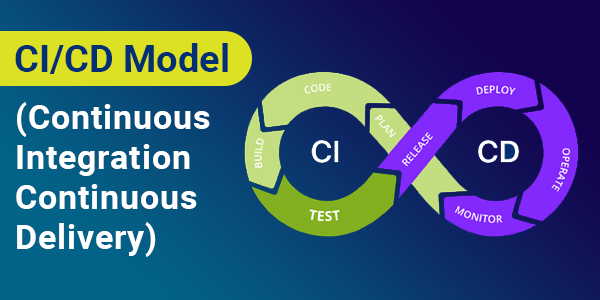
Embedding security testing into the delivery pipeline is what keeps this from being a one-time exercise, which is the idea behind DevSecOps. Vulnerabilities found in a pipeline check cost a fraction of vulnerabilities found in production.
Where AI fits in custom healthcare software
AI is now part of most healthcare software conversations, and the useful question is where it earns its place. The strongest current uses are documentation support, patient communication, triage assistance, claims and denial prediction, and operational forecasting. The weakest are anywhere a wrong output could directly harm a patient without a clinician checking it.
Four rules keep AI features safe and defensible:
- Keep a clinician in the loop for anything that influences diagnosis or treatment.
- Make recommendations explainable. The FDA's CDS approach turns partly on whether a clinician can independently review the basis of a recommendation.
- Control your data. Know exactly what patient data goes to which model, where it's processed and whether it's retained.
- Track the regulatory calendar. In the EU, the AI Act amendments that entered into force on 27 July 2026 moved high-risk obligations to 2 December 2027 for stand-alone systems and 2 August 2028 for AI embedded in regulated products such as medical devices.
The custom healthcare software development process
A sound process reduces risk at every step. Here's what a well-run project looks like.
| Stage | What happens | Typical duration |
| 1. Discovery and requirements | Stakeholder interviews, workflow mapping, requirements specification, risk and compliance scoping | 2 to 6 weeks |
| 2. Compliance and architecture plan | Applicable regulations, data flows, integration map, security architecture | 2 to 4 weeks |
| 3. UX and UI design | User journeys, accessibility, clinician and patient prototypes tested with real users | 3 to 6 weeks |
| 4. Development | Iterative sprints, integrations, security controls built in | 3 to 12+ months |
| 5. Testing and validation | Functional, integration, security, performance and usability testing, plus clinical validation where relevant | Runs alongside development, with a final phase of 4 to 8 weeks |
| 6. Deployment and training | Staged rollout, data migration, user training, hypercare | 2 to 6 weeks |
| 7. Support and evolution | Monitoring, patches, compliance updates, new features | Ongoing |
Discovery deserves more time than most teams give it.
The single best predictor of a smooth project is the quality of the discovery phase. Sit with clinicians and front-desk staff, watch the real workflow and document where it breaks. Teams that skip this build software that matches the org chart instead of the way work actually happens. A dedicated software development consulting engagement at this stage is often the cheapest insurance you can buy.
Start with an MVP
For most products, an MVP covering the one or two workflows that matter most gets you real user feedback in three to four months. It also gives you something concrete to test against compliance and security requirements before you've invested in the full feature set.
Modernizing instead of replacing
Not every project starts from a blank page. If you're carrying a legacy system that still holds critical data, a phased legacy application migration is often safer than a big-bang replacement, because clinical operations keep running while the new platform comes online.
How much does custom healthcare software development cost in 2026?
Healthcare software development cost depends on scope, integrations, compliance requirements and team location. The ranges below are planning estimates compiled from published 2026 industry pricing guides and rounded. They are not quotes and not audited benchmarks, and real projects vary widely.
How to read these ranges. For planning, assume they cover product discovery, UX design, engineering, standard security testing and basic compliance documentation for one primary jurisdiction. Treat cloud hosting, data migration, third-party licences, independent penetration tests, regulatory submissions (such as FDA premarket review) and post-launch support as separate line items, covered under "Costs people forget to budget" below.
| Solution type | Planning estimate, build cost (USD) | Typical timeline |
| Patient portal | $40,000 to $200,000 | 3 to 6 months |
| Telemedicine platform | $60,000 to $300,000 | 4 to 8 months |
| Remote patient monitoring platform | $50,000 to $400,000+ | 6 to 12 months |
| Custom EMR/EHR (focused scope) | $75,000 to $500,000 | 6 to 12 months |
| Enterprise EHR or multi-facility system | $500,000 to $2,000,000+ | 12 to 24 months |
What moves the number most
- Integration count. Each external system, whether an EHR, lab, pharmacy or payer, is built and tested separately. This is often the largest single driver.
- Compliance scope. More jurisdictions mean more design and documentation work. As a planning assumption, regulated healthcare work may add 15 to 25% compared with a similar non-regulated build, depending on documentation, security testing, risk management, validation and vendor requirements.
- Feature depth on day one. A narrow MVP costs a fraction of a full release.
- AI and analytics. Model integration, data pipelines and validation add both build and run costs.
- Team location. Published 2026 guides put US-based development at roughly $150 to $250+ per hour against $30 to $80 for offshore teams, which is why sourcing model matters as much as scope.
Costs people forget to budget.
- Maintenance: as a planning assumption, budget roughly 15 to 25% of the initial build per year for updates, monitoring, support and compliance changes. This is a rule of thumb, not a universal benchmark.
- Data migration: cleaning and moving legacy records is rarely small.
- Third-party licences: video, messaging, maps, terminology sets and cloud services.
- Security testing: independent penetration tests and periodic risk assessments.
- Training and change management: software nobody adopts delivers no return.
Ways to keep costs under control
Start with an MVP. Reuse proven components for standard features like authentication and messaging, and spend custom effort where your workflow is actually different. Phase integrations by priority. Do a fixed-scope discovery before committing to a full build budget.
How to choose a custom healthcare software development company
Choosing the right partner matters more than choosing the right technology. Look for evidence, not adjectives.
- Healthcare domain experience. Ask for named case studies in your segment, with real numbers. Metrics such as patients served, clinics connected, or users onboarded tell you more than logos.
- A compliance approach you can inspect. Ask how HIPAA, GDPR, DPDP or the relevant local law changes their design, not just their testing. If your product might count as a medical device, ask for evidence of the relevant quality certifications, such as ISO 13485.
- Process maturity. Independent appraisals such as CMMI show that delivery is structured and repeatable. Ask what they mean for your project in practice.
- Interoperability skill. Ask which standards they've implemented and against which systems.
- Security practices. Ask about penetration testing, secure code review, encryption standards and incident response.
- Team stability and communication. Who is on your team, how often will you see working software, and how are decisions documented?
- Ownership and exit. You should own the code and the data, with clear documentation, so you're never locked in.
- Long-term support. Healthcare software needs ongoing care. Ask about SLAs, monitoring and how compliance updates are handled.
Questions worth asking on the first call:
- Can we speak with a client in a similar setting?
- How will you handle our data during development and testing?
- What does your typical discovery phase produce?
- Who signs the Business Associate Agreement or data processing agreement?
- What happens if regulations change mid-project?
How Triazine approaches healthcare software development
Triazine Software is a CMMI Level 3 and ISO 9001:2015 certified company, and our healthcare and digital health practice builds hospital systems, maternal care platforms, community health tools, home care platforms, and mental health applications for organisations across the US, UK, Middle East, and South Asia.
A few principles guide the work:
- Compliance is part of the architecture. Encryption, role-based access, consent management and audit-ready logging are standard on every platform, designed around HIPAA for US deployments and around DPDP and UK GDPR for other markets.
- We start from the workflow. Every engagement begins with how care is actually delivered, then works back to the system.
- We build for real conditions. That means low-connectivity field capture for health camps, government-scale case tracking for maternal care and unified records for multi-provider home care.
- We stay after launch. Platforms like Housepital continue to evolve as the clinic network grows.
If you're weighing a build, our team can work with you from discovery through delivery and support as your custom software development partner, or as a focused healthcare engineering team alongside your own.
Six mistakes that inflate healthcare software projects
- Treating compliance as a final-phase checkbox. Retrofitting encryption, consent and audit trails is slow and expensive.
- Skipping clinician involvement. If the people who'll use it aren't in design reviews, adoption suffers.
- Underestimating integration. Every connected system adds design, build and test effort.
- Building everything on day one. A narrow MVP tests assumptions before you've spent the full budget.
- Ignoring the data migration problem. Legacy data is messy, and cleaning it takes real time.
- Forgetting run costs. Hosting, monitoring, licences, and compliance updates continue long after launch.
Frequently asked questions
What is custom healthcare software development?
Custom healthcare software development means building software specifically for a healthcare organisation's workflows, compliance obligations, and existing systems, rather than adapting a packaged product. It covers EHR and EMR systems, hospital management, telemedicine, patient portals, remote monitoring, billing and programme platforms.
How much does custom healthcare software development cost?
Planning-level 2026 budgets range from about $40,000 to $200,000 for a patient portal and $60,000 to $300,000 for a telemedicine platform, up to $500,000 or more for a full EHR or multi-facility system. As a planning assumption, regulated work can add 15 to 25% to a comparable non-regulated build, and yearly maintenance often falls in a similar range. Integrations and scope drive the final number most.
How long does it take to build healthcare software?
A focused MVP usually takes three to four months. Full platforms take six to twelve months, and enterprise multi-facility systems can take twelve to twenty-four months, depending on integrations, compliance work and the number of user roles.
Is custom healthcare software HIPAA compliant by default?
No. You have to design and document compliance. That means encryption, access controls, audit logging, a documented risk analysis, Business Associate Agreements with vendors who touch patient data, and ongoing monitoring. HIPAA applies to how the software is built and operated, not just to the code. A development partner can implement safeguards and provide documentation, but no software vendor can guarantee compliance without reviewing how the product is deployed and used.
Do I need FDA approval for my healthcare software?
It depends on what the software does. Software that analyses medical images or device signals for a medical purpose generally remains under FDA device oversight, and classification depends on intended use and functionality. Some clinical decision support and documentation tools can qualify as non-device software if they meet the FDA's criteria. Review the FDA's January 2026 CDS guidance and confirm your classification early, because it affects scope, timeline and cost.
How do I choose a custom healthcare software development company?
Look for named healthcare case studies with real outcomes, a compliance approach built into the design, interoperability experience with standards like HL7 FHIR, proven delivery maturity such as CMMI, clear code and data ownership, and a post-launch support plan.
Ready to plan your healthcare software?
Whether you're modernizing a hospital system, launching a digital health product or building a programme platform, a short conversation about scope, compliance and integrations is the fastest way to a realistic plan. Talk to Triazine's team about your project through our healthcare and digital health practice or start a conversation directly.
Sources and further reading
- Grand View Research: Digital Health Market Size and Share Report, 2026-2033
- Federal Register: HIPAA Security Rule To Strengthen the Cybersecurity of ePHI (NPRM, January 6, 2025)
- HHS: HIPAA Security Rule NPRM fact sheet
- FDA: Clinical Decision Support Software, guidance issued January 29, 2026
- CMS: Interoperability and Prior Authorization Final Rule (CMS-0057-F)
- HIPAA Journal: HIPAA Security Rule Update Postponed
- HIPAA Journal: Average Cost of a Healthcare Data Breach 2025 (IBM data)
- Government of India, PIB: Digital Personal Data Protection Rules, 2025
- DLA Piper: Digital AI Omnibus and high-risk AI deadlines



























































 Get free quote