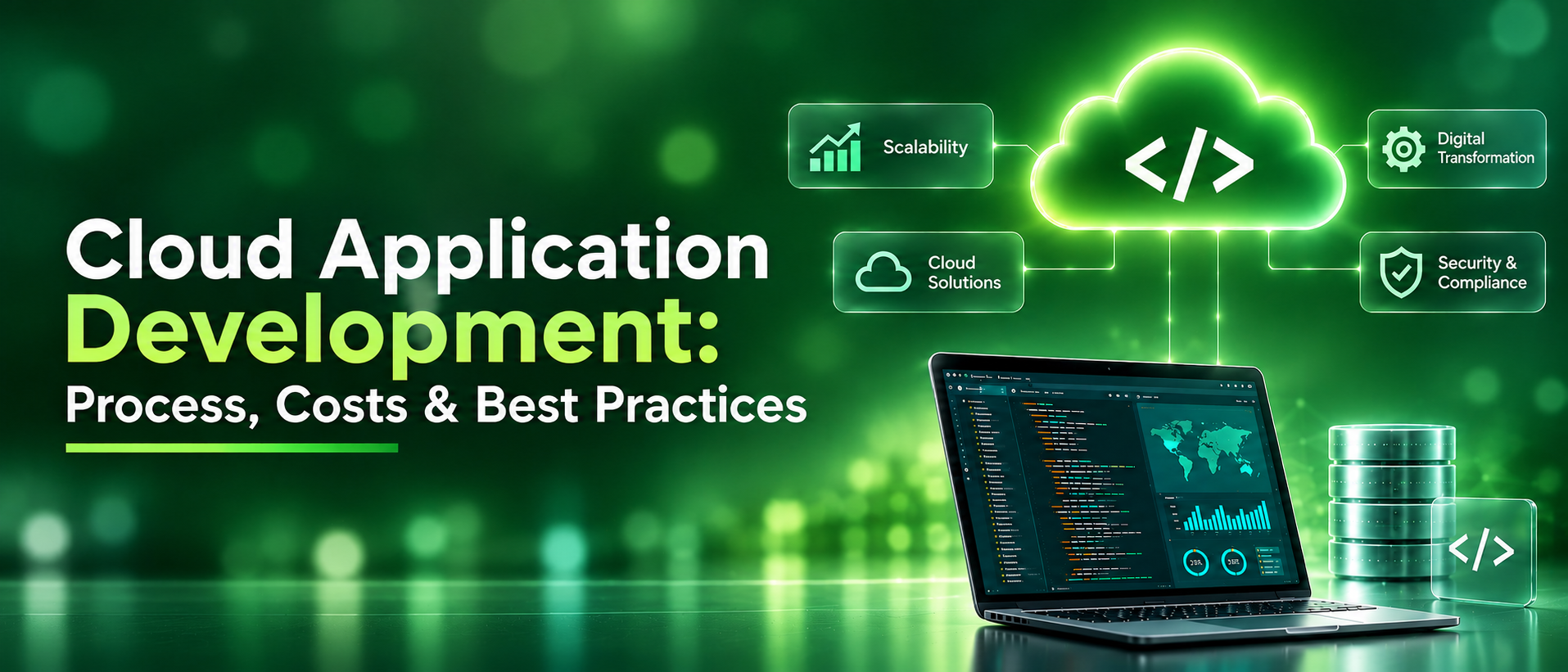
Introduction: The Cloud Is Where Modern Applications Are Born
A decade ago, enterprises asked whether to move applications to the cloud. Today, the leading question is how to build applications that are designed for the cloud from their very first line of code. That shift has turned cloud application development into a core business capability, one that shapes how quickly a company launches products, scales into new markets and puts AI to work.
The data shows how far this shift has already travelled. The CNCF's 2025 Annual Cloud Native Survey found that 98% of organizations have adopted cloud native techniques, and 82% of container users now run Kubernetes in production, up from 66% in 2023 (CNCF, 2026). At the same time, Flexera's 2026 State of the Cloud report shows that managing cloud spend is a top priority for 85% of organizations, with an estimated 29% of cloud spend still open for optimization (Flexera, 2026).
Together, these numbers tell a clear story. Building in the cloud is now the standard, and the real advantage goes to enterprises that build well: with the right architecture, a disciplined process and cost awareness designed in from day one.
This guide brings that full picture together. You will learn:
- What cloud application development is, and how cloud-native, cloud-enabled and cloud-based apps compare
- Service and deployment models, and how to choose between them
- The architecture building blocks behind high-performing cloud apps
- A proven 8-step development process
- Realistic cost ranges, the factors that drive them and how to optimize running costs
- 12 best practices, the modern tech stack and the trends shaping 2026
- How to choose the right cloud app development services partner
Whether you are launching a new SaaS product, modernizing a legacy platform or building an AI-ready enterprise application, this guide is designed to help you plan with clarity and invest with confidence.
What Is Cloud Application Development?
Cloud application development is the practice of designing, building, testing, deploying and operating software that runs on cloud infrastructure and uses cloud services such as managed databases, serverless functions, containers, identity, messaging and AI APIs. Users reach these applications through a browser, mobile app or API, while compute, storage and scaling are handled by the cloud platform.
In practical terms, application development in cloud computing shifts the team's focus. Instead of provisioning servers and patching hardware, developers concentrate on business logic, user experience and data, while the platform delivers elasticity, resilience and global reach on demand.
Cloud-native vs cloud-enabled vs cloud-based applications
These three terms often appear together, and each describes a different starting point and architecture.
| Dimension | Cloud-native | Cloud-enabled (lift and shift) | Cloud-based (SaaS-delivered) |
| Starting point | Designed for the cloud from day one | Existing application moved to cloud servers | Application consumed or delivered over the internet |
| Architecture | Microservices, containers, serverless, managed services | Largely the original monolith on virtual machines | Varies; often multi-tenant SaaS |
| Scaling | Automatic, per service | Mostly vertical, per server | Managed by the provider |
| Release speed | Daily or weekly via CI/CD | Periodic releases | Continuous, provider-led |
| Best fit | New digital products, high-growth platforms, AI-ready apps | Fast data-centre exit, first step of modernization | Standard business functions such as CRM, HR, collaboration |
Most enterprises use all three. A common path is to lift and shift first for speed, then progressively re-architect high-value workloads into cloud-native services. Our guide to legacy application modernization explains how to sequence that journey.
Cloud application vs web application
Every cloud application can be reached over the web, yet the two terms describe different things. A web application describes how users access software: through a browser. A cloud application describes how software is built and run: on distributed, elastic cloud infrastructure with managed services, automated scaling and pay-per-use economics. A modern enterprise product is usually both.
Cloud Service and Deployment Models
Two early decisions shape every cloud application: which service model your team builds on, and which deployment model hosts it. Getting both right sets the foundation for cost, control and speed.
Service models: how much the platform manages for you
| Model | You manage | The provider manages | Ideal for | Examples |
| IaaS | OS, runtime, middleware, apps, data | Servers, storage, networking, virtualization | Full control, custom workloads, lift and shift | AWS EC2, Azure Virtual Machines, Google Compute Engine |
| PaaS | Application code and data | Everything beneath the application | Fast development with managed runtimes | Azure App Service, Google App Engine, AWS Elastic Beanstalk |
| CaaS | Containers and their configuration | Orchestration control plane and nodes | Portable microservices at scale | Amazon EKS, Azure AKS, Google GKE |
| FaaS / serverless | Functions and events | All infrastructure and scaling | Event-driven, spiky or background workloads | AWS Lambda, Azure Functions, Google Cloud Run functions |
| SaaS | Configuration and users | The entire application | Standard business functions | Microsoft 365, Salesforce, ServiceNow |
The trend for 2026 is clear: enterprises increasingly blend PaaS, containers and serverless in a single application, choosing the right model per component. For a deeper look at the serverless option, see our complete guide to serverless architecture.
Deployment models: where your application lives
- Public cloud: shared hyperscale infrastructure from AWS, Microsoft Azure or Google Cloud. Fastest to start, with the widest range of managed services.
- Private cloud: dedicated infrastructure for one organization, on premises or hosted. Ideal for strict data-residency and control requirements.
- Hybrid cloud: public and private environments working together, so sensitive workloads stay close while elastic workloads scale out.
- Multi-cloud: services from two or more public providers, chosen for best-of-breed capabilities, resilience or regional reach.
- Edge and distributed cloud: compute placed close to users or devices for low-latency use cases such as IoT, retail and manufacturing.
A practical rule of thumb: start with a primary public cloud for speed and depth of services, design for portability with containers and open standards, and add hybrid or multi-cloud patterns where regulation, latency or resilience call for them.
The Architecture Behind High-Performing Cloud Applications
Great cloud applications share a common set of building blocks. Understanding them helps leaders ask sharper questions and helps teams make choices that scale.
1. Microservices and modular design
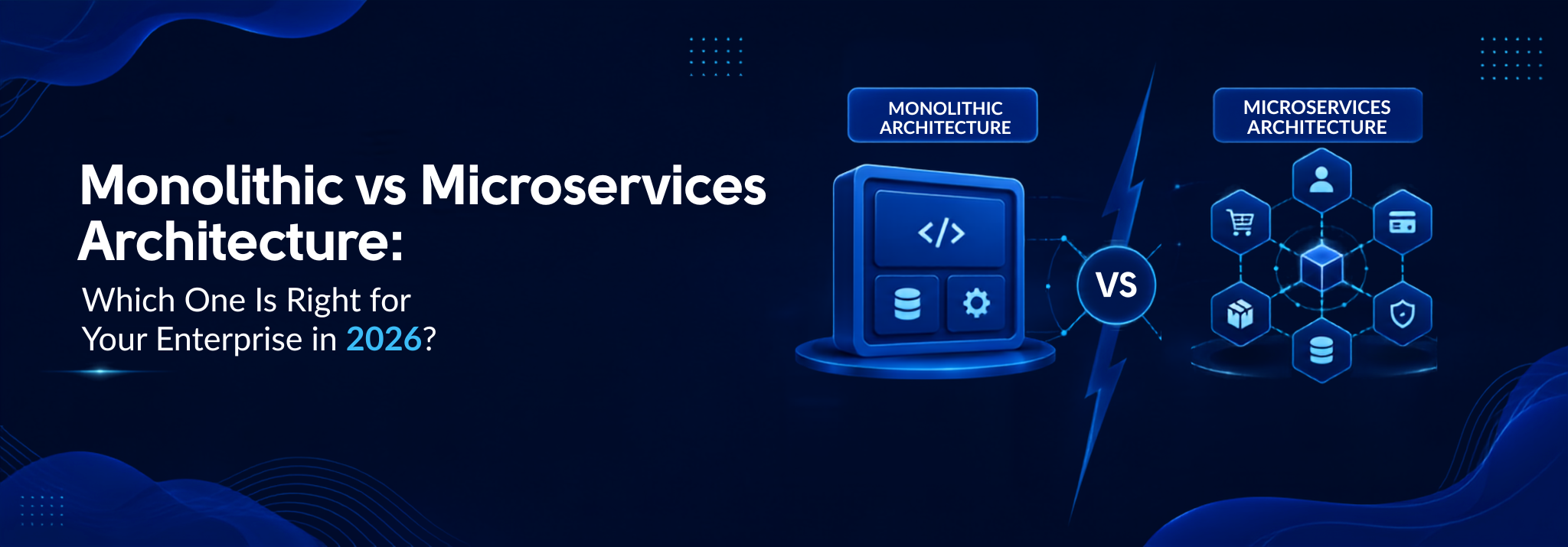
The application is split into small, independently deployable services, each owning one business capability such as orders, payments or notifications. Teams release each service on its own schedule, and each scales to its own demand. For many enterprises, a well-structured modular monolith is the right first step, evolving into microservices as scale grows. Our comparison of monolithic vs microservices architecture explores this decision in depth.
2. Containers and orchestration
Containers package code with everything it needs to run, so it behaves the same on a laptop, in testing and in production. Kubernetes orchestrates those containers, handling scheduling, self-healing, rolling updates and auto-scaling.
3. Serverless and event-driven components
Functions run only when triggered by an event, such as a file upload, a queue message or an API call, and scale to zero when idle. Event-driven design with queues and streams keeps services loosely coupled and resilient under load.
4. API-first integration
Every capability is exposed through well-documented REST or GraphQL APIs, managed by an API gateway for authentication, throttling and analytics. API-first design makes it simple to connect web and mobile front ends, partner systems and future AI agents.
5. Cloud data layer
Modern cloud apps use the right database for each job: relational databases for transactions, NoSQL for flexible high-volume data, caches for speed, object storage for files and a warehouse or lakehouse for analytics. Managed database services deliver backups, replication and scaling automatically.
6. Security and identity built in
Identity and access management, encryption in transit and at rest, secrets management and network segmentation are designed into the architecture from the start, following zero-trust principles.
7. DevOps, CI/CD and Infrastructure as Code
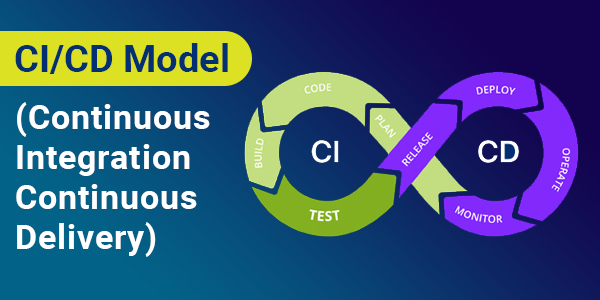
Infrastructure is defined in code with tools such as Terraform, Bicep or AWS CloudFormation, so every environment is consistent and repeatable. CI/CD pipelines build, test, scan and deploy every change automatically, turning releases into a routine, predictable event.
8. Observability
Metrics, logs and traces, often unified through OpenTelemetry, give teams a real-time view of performance, cost and user experience. Strong observability shortens the time from issue to insight to improvement.
When these eight blocks work together, the application gains the defining qualities of the cloud: elasticity, resilience, speed of change and cost transparency.
Business Benefits of Cloud Application Development
The value of cloud based application development shows up in metrics that boards and CFOs already track. Here is how the benefits map to measurable outcomes.
| Benefit | What it means for the business | KPI to track |
| Faster time to market | Managed services and CI/CD shorten the path from idea to release | Lead time for changes, release frequency |
| Elastic scalability | Capacity grows and shrinks with real demand, from launch day to peak season | Peak throughput, cost per transaction |
| Cost transparency | Pay-per-use pricing turns capital spend into a measurable operating cost | Unit cost per user or order |
| High availability | Multi-zone and multi-region designs keep services running around the clock | Uptime %, recovery time objective (RTO) |
| Enterprise-grade security | Built-in encryption, identity and compliance tooling from the major providers | Mean time to remediate, audit findings closed |
| Global reach | Deploy close to users in any region in minutes | Latency by region, new-market launch time |
| AI readiness | Direct access to managed AI models, vector databases and GPU capacity | AI features shipped, model deployment time |
| Developer productivity | Teams focus on product features instead of infrastructure upkeep | Share of time on feature work |
Speed becomes a competitive advantage
When environments are created from code in minutes and every change flows through an automated pipeline, product teams can test ideas with real users quickly and invest further in the ones that win.
Scale aligns with revenue
Cloud-native applications scale each service independently, so a surge in checkouts scales the payments service while the rest of the application stays steady. Infrastructure cost then tracks business activity closely.
Resilience is designed in
Redundancy across availability zones, automated failover and infrastructure as code make recovery fast and predictable. Disaster recovery becomes a tested, repeatable process.
Innovation stays within reach
The leading cloud platforms release new managed services every month, from generative AI to streaming analytics. A cloud-native application can adopt these capabilities through an API call, keeping the product current year after year.
The Cloud Application Development Process: 8 Steps
A disciplined process turns a promising idea into a secure, scalable product. Here is the eight-step approach high-performing teams follow.
Step 1: Discovery and business goals (2–4 weeks)
- Define the business outcome: new revenue stream, faster operations, better customer experience
- Identify users, core journeys and the measurable KPIs the application should move
- Capture compliance needs early (GDPR, HIPAA, SOC 2, PCI DSS, data residency)
- For modernization projects, assess the existing application, data and integrations
Step 2: Choose the cloud platform and models (1–2 weeks)
- Select a primary provider (AWS, Microsoft Azure or Google Cloud) based on existing skills, enterprise agreements, required services and regional presence
- Decide the service mix (PaaS, containers, serverless) per component
- Agree on the deployment model: public, hybrid or multi-cloud
Step 3: Architecture and security design (2–4 weeks)
- Design the service boundaries, data model, APIs and integration patterns
- Define the landing zone: accounts or subscriptions, networking, identity and guardrails
- Run threat modelling and set security controls, logging and backup strategy
- Estimate running costs per environment and set budgets and alerts from day one
Step 4: UX and UI design (2–4 weeks, in parallel)
- Map user journeys and build wireframes and clickable prototypes
- Validate with real users before development starts
- Create a reusable design system for web and mobile consistency
Step 5: Agile development (8–24+ weeks)
- Build in two-week sprints with working software at the end of each
- Provision every environment through Infrastructure as Code
- Set up CI/CD so each commit is built, tested and security-scanned automatically
- Integrate third-party services, legacy systems and AI capabilities through APIs
Step 6: Testing and quality engineering (continuous)
- Automate unit, integration, API and end-to-end tests inside the pipeline
- Run performance and load tests that simulate peak traffic
- Conduct security testing, including SAST, DAST and penetration testing. Learn more in our guide to VAPT
- Validate disaster recovery with a live switchover to a secondary zone or region
Step 7: Deployment and launch (1–2 weeks)
- Release with blue-green or canary strategies so a small share of users sees new versions first
- Use feature flags to switch capabilities on progressively
- Monitor dashboards closely during the launch window with clear rollback steps ready
Step 8: Operate, monitor and optimize (ongoing)
- Track performance, errors, user behaviour and cost in one observability view
- Right-size resources and apply savings plans as usage patterns stabilize
- Release improvements continuously based on user feedback and product analytics
Pro tip: Start with a focused MVP that proves one high-value user journey end to end. A production-grade MVP on a solid cloud foundation becomes the platform for every feature that follows.
Typical timelines
| Application scope | Typical timeline |
| MVP or single-workflow app | 3–4 months |
| Mid-sized business application | 4–8 months |
| Enterprise platform with multiple services and integrations | 9–12+ months |
How Much Does Cloud Application Development Cost?
Cloud application development typically ranges from $30,000 for a focused MVP to $400,000+ for a complex enterprise platform. The final figure depends on scope, architecture, integrations, compliance and the delivery model you choose. Just as important is the second number: the monthly cost to run the application once it is live.
Indicative build cost by application complexity
| Complexity | What it typically includes | Indicative build cost | Timeline |
| MVP / simple app | One core workflow, standard authentication, managed database, basic admin panel | $30,000–$70,000 | 3–4 months |
| Mid-complexity app | Multiple user roles, payments, 3–5 integrations, analytics dashboard, web + mobile | $70,000–$180,000 | 4–8 months |
| Enterprise platform | Microservices, multi-tenant SaaS, AI features, ERP/CRM integration, compliance controls, multi-region | $180,000–$400,000+ | 9–12+ months |
Ranges are indicative estimates based on blended global delivery rates and exclude ongoing cloud hosting fees.
The 8 factors that shape your build cost
- Feature scope and complexity: the number of user journeys, roles and business rules.
- Architecture choice: a modular monolith is quicker to build; microservices add upfront effort and pay back at scale.
- Integrations: every connection to ERP, CRM, payment gateways or legacy systems adds design and testing effort.
- Data and AI features: recommendation engines, document intelligence or generative AI copilots add data engineering and model work.
- Security and compliance: HIPAA, PCI DSS, SOC 2 or GDPR controls add design, documentation and testing effort.
- Platforms and front ends: web only, or web plus iOS and Android apps.
- Migration effort: moving data and users from an existing system adds planning and validation.
- Team location and engagement model: blended onshore and offshore delivery offers the strongest balance of proximity and cost efficiency.
Running costs: the number to plan for from day one
Once live, a cloud application carries recurring costs across five areas:
| Cost area | What it covers | Typical share of monthly run cost |
| Compute | VMs, containers, serverless functions | 35–50% |
| Data and storage | Databases, object storage, backups | 15–25% |
| Networking | Data transfer, load balancers, CDN | 10–20% |
| Managed services | Monitoring, security, AI APIs, messaging | 10–20% |
| Support and maintenance | Updates, enhancements, on-call support | Often 15–20% of the initial build cost per year |
Shares vary widely by workload; treat them as planning guidance.
FinOps: keeping cloud spend aligned with value
With an estimated 29% of cloud spend open for optimization (Flexera, 2026), cost discipline is a design responsibility. Proven FinOps practices include:
- Tag every resource by product, team and environment so costs map to owners
- Right-size continuously using utilization data, and scale development environments down outside working hours
- Commit wisely with savings plans or reserved capacity for steady workloads
- Use spot or preemptible capacity for batch jobs, testing and fault-tolerant workloads
- Design for efficiency: serverless for spiky traffic, caching to reduce database load, lifecycle rules for storage
- Track unit economics such as cost per customer or per transaction, so engineering and finance share one language
- Govern AI workloads with budgets and usage dashboards for model inference and GPU capacity
12 Best Practices for Cloud Application Development
These practices separate cloud applications that simply run from those that scale gracefully, stay secure and keep costs predictable.
Architecture
- Design for the twelve-factor model. Stateless services, configuration in the environment and disposable processes make applications portable and easy to scale.
- Design for resilience from day one. Use retries with back-off, circuit breakers, health checks and multi-zone deployment so the application recovers on its own.
- Choose managed services by default. Managed databases, queues and identity services free your team to focus on features that differentiate the business.
- Keep portability in mind. Containers, open standards and Infrastructure as Code keep future options open across providers.
Security and compliance
- Shift security left. Embed code scanning, dependency checks and secrets detection into every pipeline run with a DevSecOps approach.
- Adopt zero trust. Verify every user and service, grant least-privilege access and encrypt data in transit and at rest.
- Automate compliance evidence. Policy-as-code and continuous configuration checks keep every environment audit-ready.
Delivery and operations
- Automate everything repeatable. Environments, deployments, tests and rollbacks all belong in code and pipelines.
- Release in small, safe increments. Canary releases, feature flags and trunk-based development keep every release safe and speed up feedback.
- Instrument from the first sprint. Build observability with metrics, logs and traces into the application, alongside service-level objectives (SLOs) that reflect user experience.
Cost and performance
- Treat cost as a core quality requirement. Estimate cost per feature during design, review it in sprint demos and set budget alerts in every account.
- Optimize the data path. Cache frequently read data, place compute close to data and use a CDN for static content to improve both speed and cost.
Following these practices consistently is what turns a cloud application development platform into a lasting competitive asset. Our guide on building effective and scalable web applications adds further engineering detail.
The Modern Cloud Application Tech Stack
The right stack balances team skills, performance needs and long-term maintainability. Here is a reference view of the layers most enterprise cloud applications use in 2026.
| Layer | Popular choices |
| Cloud platforms | AWS, Microsoft Azure, Google Cloud |
| Front end (web) | React, Next.js, Angular, Vue.js |
| Mobile | Flutter, React Native, Swift, Kotlin |
| Back end | Node.js, .NET, Java (Spring Boot), Python (FastAPI, Django), Go |
| Containers and orchestration | Docker, Kubernetes (EKS, AKS, GKE), Helm |
| Serverless | AWS Lambda, Azure Functions, Google Cloud Run |
| Databases | PostgreSQL, MySQL, Amazon Aurora, Azure SQL, MongoDB, Cosmos DB, DynamoDB |
| Caching and messaging | Redis, Kafka, RabbitMQ, Amazon SQS, Azure Service Bus |
| Data and analytics | Snowflake, Databricks, BigQuery, Microsoft Fabric |
| AI and ML | Azure OpenAI, Amazon Bedrock, Google Vertex AI, vector databases |
| Infrastructure as Code | Terraform, OpenTofu, Bicep, AWS CloudFormation, Pulumi |
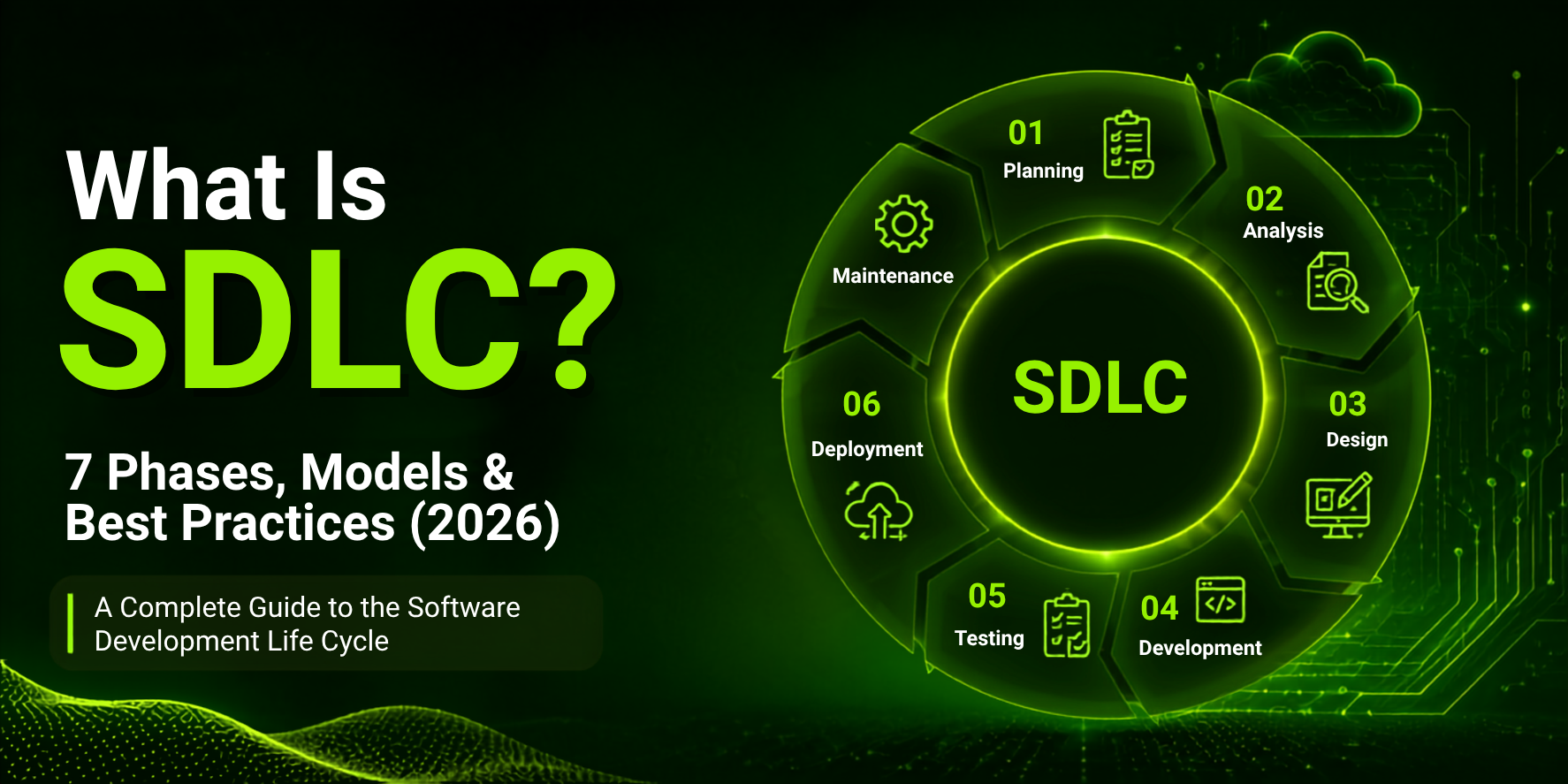
| CI/CD | GitHub Actions, GitLab CI, Azure DevOps, Argo CD |
| Observability | OpenTelemetry, Prometheus, Grafana, Datadog, Azure Monitor |
| Security | Cloud-native IAM, HashiCorp Vault, Snyk, Microsoft Defender for Cloud, AWS Security Hub |
Choosing between AWS, Azure and Google Cloud
- AWS offers the broadest catalogue of services and a large global footprint, a strong fit for diverse, high-scale workloads.
- Microsoft Azure integrates naturally with Microsoft 365, Entra ID, .NET and enterprise agreements, a strong fit for Microsoft-centric organizations. Explore Triazine's Microsoft Azure enterprise solutions.
- Google Cloud stands out for data analytics, Kubernetes heritage and AI tooling, a strong fit for data-intensive products.
The best cloud application development platform is the one that matches your existing skills, enterprise agreements, data strategy and the managed services your roadmap depends on.
Trends Shaping Cloud Application Development in 2026
1. AI-native applications
Generative AI has moved from experiment to everyday feature. Flexera reports that 81% of organizations now use generative AI, up from 47% in 2024 (Flexera, 2026). Cloud apps increasingly ship with copilots, semantic search, document intelligence and AI agents built into core workflows.
2. Kubernetes as the platform for AI
The CNCF found that 66% of organizations hosting generative AI models use Kubernetes for some or all inference workloads (CNCF, 2026). One orchestration layer now runs both application services and AI models.
3. Agentic AI in enterprise workflows
AI agents that plan, call APIs and complete multi-step tasks are reshaping how cloud applications are designed. API-first architecture is the foundation that lets agents act safely across systems. Read our guide to taking agentic AI from pilot to production.
4. Platform engineering and internal developer platforms
Enterprises are building golden paths: self-service templates for new services that include CI/CD, security and observability by default. Developers ship faster, and every service starts compliant.
5. GitOps for consistent operations
Git becomes the single source of truth for both application and infrastructure state. The CNCF notes that 58% of cloud native innovators use GitOps principles extensively.
6. FinOps for AI
As AI workloads grow, so does the focus on GPU utilization, model inference cost and token budgets. Cost dashboards that cover AI alongside compute and storage are becoming standard.
7. Serverless containers and scale-to-zero
Services such as Google Cloud Run and Azure Container Apps combine the portability of containers with the economics of serverless, a strong fit for APIs and event-driven workloads.
8. Sovereign and distributed cloud
Data-residency regulations and low-latency use cases are driving sovereign cloud regions and edge deployments, so applications serve users close to where they are, within local regulatory frameworks.
9. Sustainable cloud engineering
Carbon-aware scheduling, efficient instance types and right-sized architecture help organizations meet ESG goals while lowering cost at the same time.
How to Choose the Right Cloud App Development Services Partner
The partner you select shapes speed, quality and total cost of ownership for years. Evaluate cloud app development services providers on these eight criteria:
| # | Criterion | What to look for |
| 1 | Cloud-native depth | Production experience with microservices, Kubernetes, serverless and managed data services |
| 2 | Multi-cloud certification | Certified engineers across AWS, Azure and Google Cloud, with an objective view of each |
| 3 | Security-first engineering | DevSecOps pipelines, threat modelling and compliance experience in your industry |
| 4 | FinOps discipline | Cost estimates in the proposal, tagging standards and monthly cost reviews after launch |
| 5 | DevOps maturity | Infrastructure as Code, automated testing and frequent, predictable releases |
| 6 | AI and data capability | Proven delivery of AI features, data platforms and analytics on cloud |
| 7 | Relevant case studies | Comparable projects in scale, industry and complexity |
| 8 | Flexible engagement models | Fixed-scope projects, dedicated teams, staff augmentation and managed services |
Questions to ask in your evaluation
- How will you estimate and track the monthly running cost of our application?
- Which parts of the architecture will use managed services, and why?
- How do you handle security reviews and compliance evidence during delivery?
- What does your release process look like, and how often will we see working software?
- How will knowledge transfer to our internal team after launch?
Why Triazine Software for Cloud Application Development
Triazine Software designs, builds and runs cloud applications for enterprises and growth-stage companies across healthcare, utilities, energy, manufacturing, logistics and the public sector. Our teams combine cloud-native engineering with a sharp focus on business outcomes and cost efficiency.
What we bring:
- End-to-end cloud development: strategy, architecture, UX, development, testing and launch through our cloud development and migration services
- Modernization expertise: re-platforming and re-architecting legacy systems into scalable cloud-native applications with our legacy application modernization practice, as shown in our enterprise application modernization case study
- Web and mobile on one cloud foundation: web application development and mobile app development sharing secure, API-first back ends
- Security and operations built in: DevSecOps pipelines and cloud managed services for 24/7 monitoring, optimization and support
- AI-ready applications: agentic AI, conversational AI and intelligent document processing integrated into your cloud workflows
- Flexible teams: fixed-scope delivery, a dedicated development centre or on-demand cloud and DevOps engineers
- US presence with global delivery: through Triazine Software LLC, our US team works closely with your stakeholders, supported by scalable global engineering teams
Explore more of our work in our case studies.
Frequently Asked Questions
What is cloud application development?
Cloud application development is the process of designing, building, deploying and operating software that runs on cloud infrastructure and uses managed cloud services for compute, data, security and scaling.
How much does cloud app development cost?
Indicative build costs range from about $30,000–$70,000 for an MVP, $70,000–$180,000 for a mid-complexity application and $180,000–$400,000+ for an enterprise platform, plus ongoing hosting and support costs.
How long does cloud application development take?
A focused MVP typically takes 3–4 months, a mid-sized business application 4–8 months and an enterprise platform 9–12 months or more.
What is the difference between cloud-native and cloud-based applications?
Cloud-native applications are designed for the cloud from the start, using microservices, containers and managed services. Cloud-based applications run on or are delivered through the cloud and may have been built with traditional architectures.
Which cloud platform is best for application development?
AWS, Microsoft Azure and Google Cloud are all excellent choices. The best fit depends on your team's skills, existing enterprise agreements, required managed services and data strategy.
Is the cloud secure enough for enterprise applications?
Yes. The major cloud providers offer enterprise-grade encryption, identity management and compliance certifications. Strong security comes from combining those capabilities with secure architecture, DevSecOps and continuous monitoring.
What is a cloud application development platform?
It is the combination of cloud services, tools and frameworks a team uses to build and run applications, such as Azure App Service, Google Cloud Run or AWS Amplify, together with CI/CD, monitoring and data services.
How do I keep cloud running costs under control?
Apply FinOps practices: tag resources, right-size continuously, use savings plans for steady workloads, design for efficiency and track unit costs such as cost per customer or per transaction.
Conclusion
Cloud application development is now the foundation of digital growth. The enterprises that lead are the ones that combine cloud-native architecture, a disciplined delivery process and cost awareness built in from the very first sprint.
The path forward is clear: define the business outcome, choose the right platform and models, design for security and scale, build in small and safe increments, and optimize continuously once you are live. With the right partner, every step compounds into faster launches, happier users and a stronger return on every cloud dollar.
Ready to build your next cloud application? Talk to Triazine's cloud experts for a discovery session and a tailored estimate for your project.





































 Get free quote