Introduction: The Next Chapter of the American EHR
The United States has completed the first chapter of its digital health journey. According to the Assistant Secretary for Technology Policy (ASTP/ONC), more than 99% of non-federal acute care hospitals had adopted a certified EHR by 2024 (HCI, July 2026). The focus for 2026 has moved beyond digitizing records to building EHR platforms that clinicians enjoy using, that exchange data effortlessly and that put AI to work safely.
Three forces are reshaping EHR software development right now:
- Interoperability at national scale. TEFCA, the national framework for health information exchange, grew from 10 million to more than 1 billion health records exchanged in under a year (HHS, June 2026).
- A refreshed certification landscape. ONC's HTI-5 final rule, released on October 26, 2026, removes 14 certification criteria, revises 7 more and shifts certification toward HL7 FHIR-based APIs, with HHS projecting more than $1.5 billion in regulatory savings (HHS, October 2026; Holland & Knight).
- Security as a board-level priority. Healthcare has been the costliest industry for data breaches for 14 consecutive years, with an average breach cost of $7.42 million (IBM via TechTarget, 2025). A major update to the HIPAA Security Rule is now expected in July 2027 (Fierce Healthcare).
For U.S. health systems, specialty practices, digital health companies and health IT vendors, these shifts create a real opportunity. Custom EHR development lets organizations design around their own clinical workflows, specialties and care models, while meeting federal standards from day one.
What Is EHR Software Development?
EHR software development is the process of designing, building, certifying, integrating and maintaining an electronic health record platform: the system that stores a patient's longitudinal clinical record and supports the workflows of clinicians, administrators and patients. Modern EHR system development spans clinical documentation, orders, e-prescribing, scheduling, billing, analytics, patient engagement and secure data exchange with the wider healthcare ecosystem.
EHR vs EMR vs PHR
| Dimension | EHR (Electronic Health Record) | EMR (Electronic Medical Record) | PHR (Personal Health Record) |
| Scope | Comprehensive, longitudinal record across providers and settings | Digital chart within a single practice or organization | Health information managed by the patient |
| Data sharing | Designed for exchange with labs, pharmacies, payers, HIEs and other providers | Primarily internal use | Patient-controlled sharing |
| Typical users | Health systems, multi-specialty groups, care networks | Single practices and clinics | Patients and caregivers |
| Interoperability | Core requirement (FHIR APIs, HL7, TEFCA) | Focused on internal records | Connects through patient-access APIs |
In the US market, buyers and regulators increasingly expect EHR-level capabilities even from smaller practices, especially around patient access APIs and data exchange.
Types of EHR solutions
- Cloud-based (SaaS) EHRs: hosted by the vendor, accessed through the browser and mobile apps, with fast updates and predictable subscription pricing
- On-premises EHRs: hosted in the provider's own data center, offering maximum infrastructure control
- Hybrid EHRs: sensitive workloads on private infrastructure with cloud services for analytics, patient engagement and AI
- Specialty EHRs: purpose-built for behavioral health, oncology, ophthalmology, dermatology, physical therapy, dental, long-term care or other specialties
- Modular EHR components: a focused module, such as a specialty documentation app or care-coordination tool, that plugs into a major EHR through SMART on FHIR
Custom EHR development vs off-the-shelf EHR
| Factor | Off-the-shelf EHR | Custom EHR software development |
| Time to go live | Faster for standard workflows | Longer initial build, tailored from day one |
| Workflow fit | Configurable within the vendor's design | Built around your specialty, care model and teams |
| Cost model | Ongoing per-provider licensing | Upfront investment with full ownership and predictable run costs |
| Differentiation | Shared feature set across many organizations | Unique patient and clinician experiences that set you apart |
| Integration | Vendor-defined APIs and marketplace | Open architecture designed around your ecosystem |
| Data ownership | Governed by vendor agreements | Full control of data, roadmap and intellectual property |
Custom EHR development is an especially strong fit when:
- You serve a specialty or care model with workflows that general-purpose EHRs cover only partly (behavioral health, home health, value-based care, virtual-first care)
- You are a digital health company building an EHR as the core of your product
- You run a multi-entity network and want a unified experience across brands and settings
- You want to embed AI deeply into documentation, triage and population health
- Licensing costs at scale outweigh the long-term cost of owning your platform
Many organizations take a hybrid path: keeping a major enterprise EHR as the system of record while building custom SMART on FHIR apps, patient portals and analytics layers around it. Our guide to custom healthcare software development explores these options further.
Core Features of a Modern EHR System
The best EHRs feel effortless to clinicians and empowering to patients. Here are the capabilities to plan for, grouped by who they serve.
Clinical features
- Patient chart and longitudinal record: demographics, problems, medications, allergies, immunizations, vitals, encounters and care plans in one unified view.
- Clinical documentation: structured templates and smart phrases by specialty, with ambient AI documentation that drafts notes from the clinician-patient conversation.
- Computerized provider order entry (CPOE): lab, imaging and medication orders with order sets and protocols.
- E-prescribing (eRx) and EPCS: electronic prescribing through Surescripts, including electronic prescribing of controlled substances with two-factor authentication and PDMP checks.
- Clinical decision support (CDS): drug-drug and drug-allergy alerts, care gap reminders and evidence-based guidance, increasingly delivered through CDS Hooks.
- Results management: lab and imaging results with trending, flags, acknowledgment and patient notification.
- Care coordination: referrals, transitions of care, care team messaging and task management.
Patient-facing features
- Patient portal and mobile app: secure access to records, results, visit notes, bills and messaging.
- Online scheduling and digital intake: self-scheduling, reminders, forms, consents and insurance capture.
- Telehealth: integrated video visits with documentation and billing in the same workflow.
- Remote patient monitoring: data from connected devices and wearables flowing into the chart with alerts for care teams.
Administrative and financial features
- Practice management and scheduling: provider calendars, resource scheduling and patient flow.
- Revenue cycle management: eligibility checks, charge capture, coding support (ICD-10-CM, CPT, HCPCS), claims, remittance and claim resubmission workflows.
- Electronic prior authorization: FHIR-based prior authorization aligned with CMS and ONC HTI-4 requirements.
- Reporting and quality measures: MIPS and eCQM reporting, registries and public health reporting.
Platform and governance features
- Role-based access control and audit logs: least-privilege access with a full, tamper-evident audit trail of every view and change.
- Consent and privacy management: patient consent capture, sensitive-data segmentation (including 42 CFR Part 2 records) and release-of-information workflows.
- Interoperability layer: FHIR R4 APIs, HL7 v2 interfaces, C-CDA document exchange and HIE/TEFCA connectivity.
- Analytics and population health: dashboards, risk stratification and cohort management for value-based care.
- Configurable workflows: admin tools that let clinical informatics teams adjust templates, rules and order sets through simple configuration.
Design tip: Prioritize clinician experience from the first sprint. Fewer clicks, smart defaults and AI-assisted documentation are the features that drive adoption and protect clinician time.
The 2026 US Compliance Map for EHR Software Development
Compliance shapes every architectural decision in EHR software development. Here is the U.S. regulatory landscape as of November 2026.
| Regulation or program | What it governs | What it means for your EHR build |
| HIPAA Privacy, Security and Breach Notification Rules | Protection of PHI by covered entities and business associates | Access controls, audit logs, encryption, risk analysis, BAAs and breach response processes |
| HITECH Act | Strengthened HIPAA enforcement and breach notification | Breach detection, notification workflows and accountability for business associates |
| 21st Century Cures Act (information blocking provisions) | Timely access, exchange and use of electronic health information | Open APIs, patient access and practices that support data sharing |
| ONC Health IT Certification Program (HTI-1 through HTI-5) | Certification criteria for health IT, including USCDI and FHIR APIs | Standards-based APIs, USCDI data classes and certification testing if you need certified health IT |
| CMS Promoting Interoperability and Quality Payment Program | Medicare incentives tied to certified EHR technology | CEHRT capabilities, eCQM reporting and MIPS data for your provider customers |
| CMS Interoperability and Prior Authorization Final Rule (CMS-0057-F) | Payer APIs for patient access, provider access, payer-to-payer exchange and prior authorization | FHIR-based prior authorization and payer data exchange from January 2027 |
| 42 CFR Part 2 | Confidentiality of substance use disorder treatment records | Data segmentation, consent tracking and sensitive-record labelling |
| State privacy laws | Consumer health data protections (for example, California CCPA/CPRA and Washington's My Health My Data Act) | Consent, data rights and state-specific disclosure rules |
| FDA oversight of software | Software as a Medical Device and certain clinical decision support | Regulatory assessment for AI and decision-support features |
HIPAA in practice
HIPAA-ready EHR development rests on administrative, physical and technical safeguards:
- Access control: unique user IDs, role-based permissions, automatic logoff and emergency access procedures
- Audit controls: immutable logs of every access, change and export of PHI
- Integrity and transmission security: encryption in transit (TLS 1.2+) and at rest (AES-256)
- Authentication: multifactor authentication for every user with PHI access
- Risk management: documented risk analyses, vulnerability management and incident response plans
- Business associate agreements: signed BAAs with every cloud provider and vendor that touches PHI
What's coming: HHS proposed a major HIPAA Security Rule update in January 2025 that would make encryption, MFA, network segmentation, annual penetration testing and tested incident response plans explicit requirements. The final rule is now projected for July 2027 (Fierce Healthcare). Building these controls in today future-proofs your EHR.
ONC certification after HTI-5
ONC's HTI-5 final rule, released October 26, 2026, reshapes certification for health IT developers (Holland & Knight):
- Removes 14 and revises 7 of the program's certification criteria
- Shifts certification toward HL7 FHIR-based APIs, retiring criteria tied to legacy technologies
- Retains the HTI-4 criteria for electronic prior authorization and real-time prescription benefit, along with privacy and security safeguards and public health reporting
- Streamlines AI transparency requirements by removing HTI-1 model card requirements for predictive decision support interventions
- Phases changes in at 60 days after publication, on January 1, 2027, and one on January 1, 2030
- Keeps information blocking rules as they are, with ONC deferring proposed changes; an HTI-6 proposal may follow
What this means for builders: a FHIR-first architecture is now the clearest path to certification, interoperability and future regulatory alignment.
Do you need ONC certification?
Certification matters most when your customers participate in CMS programs that require certified EHR technology (CEHRT), such as Promoting Interoperability. A digital health company building an EHR for cash-pay or specialty care may begin with a HIPAA-compliant, FHIR-native platform and pursue certification as the customer base grows. Either way, designing to certification standards from the start keeps every option open.
Security frameworks that build buyer trust
Enterprise health system buyers increasingly ask for independent attestation such as SOC 2 Type II, HITRUST certification and alignment with the NIST Cybersecurity Framework 2.0. Planning for these early shortens enterprise sales cycles significantly.
Interoperability: Designing an EHR That Connects With Everything
Interoperability is where good EHRs become great. A modern platform exchanges data with hospitals, labs, pharmacies, payers, HIEs, public health agencies, devices and patient apps, all through well-defined standards.
The interoperability standards stack
| Standard | Role | Where you'll use it |
| HL7 FHIR R4 | Modern RESTful API standard for health data resources | Patient access APIs, app integrations, payer exchange, bulk data |
| USCDI | The U.S. Core Data for Interoperability: the national baseline of data classes and elements | Defines which data your APIs and documents must support |
| US Core Implementation Guide | FHIR profiles that implement USCDI in the U.S. | Shapes your FHIR resources and search parameters |
| SMART on FHIR | OAuth 2.0-based app launch and authorization framework | Third-party apps inside your EHR, and your apps inside other EHRs |
| Bulk FHIR (Flat FHIR) | Population-level data export | Value-based care analytics, payer reporting, research |
| CDS Hooks | Real-time decision support triggered within clinician workflows | Embedded guidance, prior authorization checks, AI recommendations |
| HL7 v2 | Event-based messaging used widely by hospitals | ADT feeds, lab orders and results, scheduling interfaces |
| C-CDA | Structured clinical documents | Transitions of care, referrals, HIE document exchange |
| DICOM | Medical imaging format and exchange | PACS and radiology integration |
| NCPDP SCRIPT | E-prescribing standard | Surescripts eRx and EPCS |
| X12 EDI | Administrative transactions | Eligibility (270/271), claims (837) and remittance (835) |
| Terminologies: SNOMED CT, LOINC, RxNorm, ICD-10-CM, CPT | Shared clinical vocabularies | Coding problems, labs, medications, diagnoses and procedures |
TEFCA: the national network
The Trusted Exchange Framework and Common Agreement (TEFCA) connects Qualified Health Information Networks (QHINs) into a nationwide exchange fabric. With more than 1 billion records exchanged as of mid-2026 (HHS), TEFCA is fast becoming the default route for treatment, payment, individual access and public health exchange. New EHRs typically connect through a QHIN or an HIE participant, so plan this connectivity early in your roadmap.
Integration map for a U.S. EHR
- Labs: Quest, Labcorp and hospital labs via HL7 v2 or FHIR
- Pharmacy: Surescripts for eRx, medication history and real-time prescription benefit
- Imaging: PACS and radiology information systems via DICOM and HL7
- Payers and clearinghouses: eligibility, claims and FHIR-based prior authorization
- HIEs and TEFCA: record location and document exchange
- Public health: immunization registries, electronic case reporting and syndromic surveillance
- Devices and wearables: remote monitoring platforms and consumer health apps
- Enterprise systems: ERP, CRM, contact center and data warehouse platforms
Architecture tip: FHIR-native, interface-ready
The strongest approach in 2026 is a FHIR-native data model with an integration engine (such as Mirth Connect, Rhapsody or a cloud healthcare API) that translates HL7 v2, C-CDA and X12 traffic into FHIR resources. This gives you modern APIs for apps and AI, while staying fully compatible with the established interfaces hospitals rely on every day.
How to Build an EHR System: A 9-Step Process
Here is the delivery process experienced EHR developers follow to take a platform from concept to clinical use.
Step 1: Discovery and clinical workflow mapping (4–6 weeks)
- Interview physicians, nurses, front-desk staff, billers and patients
- Map current and future-state workflows for each specialty and care setting
- Define the business model: internal platform, commercial SaaS, or a hybrid built around an enterprise EHR
- Set measurable goals, such as documentation time per encounter, days in A/R or patient portal adoption
Step 2: Regulatory and certification strategy (2–4 weeks, in parallel)
- Confirm HIPAA scope and BAAs
- Decide on ONC certification scope and timing based on customer needs
- Plan for 42 CFR Part 2, state privacy laws and FDA considerations for AI features
- Choose security attestation targets (SOC 2 Type II, HITRUST)
Step 3: Architecture and data model design (3–5 weeks)
- Design a FHIR-native data model aligned with USCDI and US Core
- Define the integration architecture for HL7 v2, C-CDA, X12, DICOM and TEFCA
- Plan multi-tenancy, data residency, identity and access management
- Produce threat models, a security architecture and a disaster recovery plan
Step 4: UX research and clinician-centered design (4–8 weeks)
- Build clickable prototypes of the chart, documentation, orders and inbox
- Run usability tests with clinicians, focusing on clicks, time and cognitive load
- Design accessible patient experiences that meet WCAG 2.1 AA
Step 5: MVP development (4–7 months)
- Build the core clinical record, scheduling, documentation, orders and patient portal
- Deliver in two-week sprints with clinical stakeholders in every demo
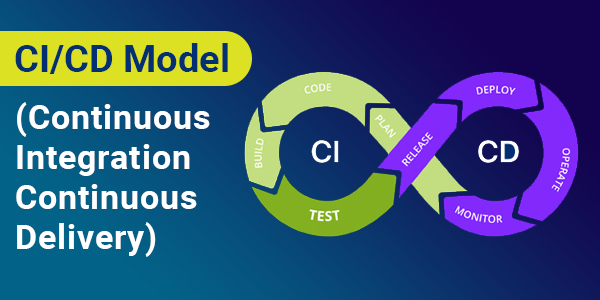
- Automate infrastructure and deployments through Infrastructure as Code and CI/CD
Step 6: Integrations and interoperability (in parallel, 2–4 months)
- Connect labs, eRx, imaging, clearinghouses and HIE/TEFCA
- Implement FHIR APIs, SMART on FHIR app launch and Bulk FHIR export
Step 7: Testing, security validation and certification (6–12 weeks)
- Functional, regression and performance testing with realistic clinical data
- Penetration testing and vulnerability scanning
- Clinical safety reviews for decision support and AI features
- ONC certification testing through an ONC-Authorized Testing Lab, where in scope
Step 8: Data migration and go-live (4–8 weeks)
- Map, cleanse and migrate data from legacy EHRs, including problems, medications, allergies, notes and documents
- Run parallel validation with clinical reviewers
- Train users with role-based sessions and at-the-elbow support during launch
Step 9: Optimization and continuous improvement (ongoing)
- Monitor usage, performance and clinician satisfaction
- Release improvements every sprint based on feedback and analytics
- Track regulatory updates such as HTI-6 and the final HIPAA Security Rule
Typical timelines
| Scope | Typical timeline |
| Specialty EHR MVP or SMART on FHIR module | 4–7 months |
| Full-featured ambulatory EHR | 9–14 months |
| Enterprise EHR with certification and multi-site rollout | 14–24 months |
EHR Architecture, Tech Stack and Team
Reference architecture
A modern cloud EHR is typically organized into six layers:
- Experience layer: clinician web app, patient portal, mobile apps and embedded SMART on FHIR apps.
- API layer: an API gateway exposing FHIR R4 APIs, SMART authorization and partner APIs, with rate limiting and monitoring.
- Clinical services layer: modular services for charting, documentation, orders, scheduling, billing, messaging and decision support.
- Data layer: a FHIR-native clinical data repository, a terminology service and a separate analytics warehouse or lakehouse.
- Integration layer: an interface engine for HL7 v2, C-CDA, X12, DICOM and TEFCA connectivity.
- Security and compliance layer: identity and access management, audit logging, consent, encryption key management and continuous monitoring.
Recommended tech stack
| Layer | Popular choices |
| Cloud (HIPAA-eligible, with BAA) | AWS, Microsoft Azure, Google Cloud |
| Managed healthcare data services | AWS HealthLake, Azure Health Data Services, Google Cloud Healthcare API |
| FHIR servers and frameworks | HAPI FHIR, Microsoft FHIR Server, Medplum |
| Front end | React, Next.js, Angular, TypeScript |
| Mobile | Flutter, React Native, Swift, Kotlin |
| Back end | Java (Spring Boot), .NET, Node.js, Python |
| Databases | PostgreSQL, Amazon Aurora, Azure SQL, MongoDB for documents |
| Integration engine | Mirth Connect (NextGen Connect), Rhapsody, Azure Integration Services |
| Terminology | SNOMED CT, LOINC, RxNorm, ICD-10-CM services |
| Identity | Okta, Microsoft Entra ID, Amazon Cognito, Auth0 with SMART on FHIR scopes |
| AI | Azure OpenAI, Amazon Bedrock, Google Vertex AI, ambient speech services |
| DevSecOps | Terraform, GitHub Actions, Azure DevOps, Snyk, SonarQube |
| Observability | OpenTelemetry, Datadog, Azure Monitor, AWS CloudWatch |
The EHR development team
| Role | Responsibility |
| Product owner / healthcare BA | Requirements, workflows and backlog prioritization |
| Clinical informaticist | Clinical safety, terminology, decision support and clinician alignment |
| Solution architect | Architecture, interoperability and security design |
| UX/UI designers | Clinician and patient experience research and design |
| Front-end and back-end engineers | Application and API development |
| Integration engineers | HL7, FHIR, X12 and third-party interfaces |
| QA and test automation engineers | Functional, regression, performance and certification testing |
| DevSecOps and cloud engineers | Infrastructure, CI/CD, monitoring and security |
| Compliance and security specialist | HIPAA, SOC 2, HITRUST and ONC readiness |
| Project / delivery manager | Planning, communication and risk management |
How Much Does EHR Software Development Cost in the USA?
Custom EHR software development for the U.S. market typically ranges from about $60,000 for a focused SMART on FHIR module to $2 million or more for a certified, enterprise-grade EHR. The final figure depends on clinical scope, integrations, certification needs, security attestation and the delivery model you choose.
Indicative cost by EHR scope
| EHR scope | What it typically includes | Indicative build cost | Timeline |
| SMART on FHIR module or specialty add-on | One focused workflow embedded in an existing EHR, FHIR read/write, SSO | $60,000–$150,000 | 3–5 months |
| Specialty EHR MVP | Patient chart, documentation, scheduling, patient portal, 3–5 integrations, HIPAA controls | $150,000–$350,000 | 4–7 months |
| Full-featured ambulatory EHR | Multi-provider charting, CPOE, eRx/EPCS, billing and RCM, telehealth, FHIR APIs, analytics | $350,000–$800,000 | 9–14 months |
| Enterprise or certified EHR platform | Multi-specialty, multi-site, ONC certification, TEFCA connectivity, AI documentation, SOC 2/HITRUST | $800,000–$2M+ | 14–24 months |
Ranges are indicative estimates for blended U.S. and global delivery teams as of 2026. They cover design, development, integration and testing, and exclude ongoing hosting and licensing of third-party services.
Cost by component
| Component | Indicative cost range |
| Discovery, clinical workflow mapping and UX prototypes | $20,000–$60,000 |
| Core clinical record and documentation | $60,000–$200,000 |
| Patient portal and mobile apps | $40,000–$150,000 |
| Billing and revenue cycle management | $50,000–$180,000 |
| Each major integration (lab, eRx, clearinghouse, HIE) | $10,000–$50,000 |
| FHIR API layer with SMART on FHIR and Bulk FHIR | $40,000–$120,000 |
| AI features (ambient documentation, summarization, coding assistance) | $50,000–$250,000 |
| ONC certification preparation and testing | $50,000–$200,000 |
| Security hardening, penetration testing and attestation readiness | $30,000–$120,000 |
| Data migration from a legacy EHR | $25,000–$150,000 |
The 9 factors that drive EHR development cost
- Clinical scope: the number of specialties, care settings and workflows.
- User types: clinicians, staff, patients, caregivers, payers and partners.
- Integrations: each lab, pharmacy network, clearinghouse, device platform and HIE connection.
- Certification: ONC certification adds design rigor, testing effort and ongoing maintenance.
- Security attestation: SOC 2 Type II or HITRUST readiness and recurring assessments.
- AI capabilities: ambient documentation, clinical summarization and predictive analytics.
- Platforms: web, iOS, Android and tablet experiences for clinicians and patients.
- Data migration: volume, quality and structure of legacy data.
- Team model and location: a blend of U.S.-based leadership and global engineering teams offers a strong balance of proximity and cost efficiency.
Plan for the total cost of ownership
| Recurring cost | Typical range |
| HIPAA-eligible cloud hosting and managed services | $2,000–$25,000+ per month, scaling with users and data |
| Third-party services (eRx network, clearinghouse, speech/AI, terminology) | Usage- or subscription-based |
| Maintenance, enhancements and regulatory updates | About 15–20% of the initial build cost per year |
| Security monitoring and annual penetration testing | $25,000–$100,000 per year |
| Certification maintenance and real-world testing | Ongoing effort for certified developers |
Ways to optimize your EHR investment
- Start with a focused MVP built around one specialty or care model, then expand
- Build FHIR-native to reduce integration effort and simplify future certification
- Use managed healthcare cloud services for FHIR storage, identity and terminology
- Reuse proven accelerators for HIPAA controls, audit logging and integration templates
- Adopt a blended delivery model that pairs U.S. stakeholder engagement with global engineering scale
AI and the Trends Shaping EHR Development in 2026
1. Ambient clinical documentation
Ambient AI listens to the clinician-patient conversation (with consent) and drafts a structured note for review and sign-off. It is the fastest-growing AI capability in U.S. care delivery because it returns time to clinicians and improves the patient experience during visits.
2. Generative AI across the chart
Chart summarization, inbox message drafting, referral letter generation, prior authorization packet assembly and coding suggestions are moving into everyday EHR workflows. Responsible design keeps a clinician in the loop for every clinical decision.
3. Agentic AI for administrative workflows
AI agents that check eligibility, gather prior authorization documentation, schedule follow-ups and close care gaps are reshaping revenue cycle and care coordination. FHIR APIs and CDS Hooks give these agents a standards-based way to act inside the EHR.
4. FHIR-first certification and APIs
With HTI-5 shifting certification toward FHIR-based APIs, new EHRs that start FHIR-native gain a structural advantage in certification, integration and partner ecosystems.
5. Electronic prior authorization
The CMS Interoperability and Prior Authorization Final Rule and ONC's HTI-4 criteria are pushing payers and providers toward FHIR-based prior authorization, with major payer API requirements arriving in January 2027. EHRs that support these workflows natively give providers faster approvals and lighter administrative workloads.
6. TEFCA-powered exchange
With more than a billion records already exchanged, TEFCA connectivity is becoming a standard expectation for EHR buyers, particularly for treatment and individual access use cases.
7. Responsible AI governance
Even as HTI-5 streamlines certification transparency requirements for predictive tools, health system buyers continue to ask for clear documentation of training data, performance monitoring, bias testing and human oversight. Building this governance into your EHR strengthens trust and speeds procurement.
8. Composable, specialty-first platforms
Health systems increasingly combine a core enterprise EHR with best-of-breed specialty modules, patient engagement layers and analytics platforms connected through SMART on FHIR. This creates strong demand for custom EHR development of focused, high-value modules.
How to Choose the Right EHR Developer
Your EHR developer shapes clinical safety, compliance and time to market. Evaluate partners against these criteria:
| Criterion | What to look for |
| Healthcare domain depth | Delivered EHR, EMR, patient engagement or care management platforms in the U.S. market |
| Compliance expertise | HIPAA safeguards, BAAs, SOC 2 or HITRUST readiness and ONC certification experience |
| Interoperability skills | Proven FHIR R4, SMART on FHIR, HL7 v2, C-CDA, X12 and HIE/TEFCA integrations |
| Clinical design capability | Clinician-centered UX research and access to clinical informatics expertise |
| AI maturity | Responsible delivery of ambient documentation, summarization and predictive features |
| Security engineering | DevSecOps, penetration testing, encryption and zero-trust architecture |
| Delivery model | U.S. presence for close collaboration, with scalable engineering teams |
| Post-launch partnership | Defined SLAs, regulatory update support and continuous improvement |
Questions to ask an EHR developer
- Which U.S. healthcare platforms have you built, and what outcomes did they deliver?
- How do you implement HIPAA safeguards, and will you sign a BAA?
- What is your approach to FHIR, SMART on FHIR and TEFCA connectivity?
- Have you supported ONC certification, and how do you plan for HTI-5 and future rules?
- How do you involve clinicians in design and testing?
- How do you govern AI features for safety, accuracy and transparency?
- How do you handle data migration from legacy EHRs?
- What does support look like after go-live?
Why Triazine Software for EHR Software Development
Triazine Software builds secure, interoperable healthcare platforms for U.S. providers, digital health companies and healthcare innovators. Our teams combine healthcare domain knowledge with deep engineering in cloud, data and AI, so every EHR we build is clinician-friendly, compliant and ready to connect.
What we bring to your EHR program:
- Custom EHR development for specialty practices, multi-site networks and digital health products, from MVP to enterprise scale through our custom software development practice
- Interoperability engineering with FHIR R4, SMART on FHIR, HL7 v2, C-CDA and integrations for labs, eRx, clearinghouses and HIEs
- HIPAA-ready architecture on AWS, Azure and Google Cloud, with DevSecOps, encryption, audit logging and role-based access built in
- AI capabilities including ambient documentation, clinical summarization and intelligent automation for administrative workflows
- Proven healthcare delivery, including patient management, on-demand home healthcare, mental health consultation and maternal and child health platforms
- U.S. presence with global delivery through Triazine Software LLC, so our U.S. team works closely with your stakeholders while scalable engineering teams keep your investment efficient
- Flexible engagement models, from fixed-scope MVPs to dedicated healthcare product teams
Explore our healthcare software solutions to learn more.
Frequently Asked Questions
What is EHR software development?
EHR software development is the process of designing, building, integrating, certifying and maintaining an electronic health record platform that stores patients' longitudinal clinical records and supports clinical, administrative and patient workflows.
How much does custom EHR development cost in the USA?
Indicative costs range from about $60,000–$150,000 for a SMART on FHIR module, $150,000–$350,000 for a specialty EHR MVP, $350,000–$800,000 for a full-featured ambulatory EHR and $800,000–$2M+ for an enterprise or certified platform.
How long does it take to build an EHR system?
A specialty MVP typically takes 4–7 months, a full-featured ambulatory EHR 9–14 months and an enterprise EHR with certification and multi-site rollout 14–24 months.
How do I build an EHR system that is HIPAA compliant?
Apply HIPAA's administrative, physical and technical safeguards: role-based access, MFA, encryption in transit and at rest, audit logging, risk analysis, incident response and signed BAAs with every vendor that handles PHI. Host on HIPAA-eligible cloud services and test security regularly.
Does a cu





























































 Get free quote