Custom Android App Development: Cost, Process & Timeline (2026 Guide)
Custom Android app development is the process of designing and building an Android app around your users, data, and workflows, rather than adapting a ready-made product. A focused custom Android MVP typically costs $15,000 to $50,000 and reaches a pilot in 8 to 14 weeks. A full enterprise app with ERP or SAP integration typically takes 6 to 10 months.
This guide covers what custom Android applications are, what they cost in 2026, how long each stage takes, which tech stack to choose, and the Google Play rules every new app must meet. Every range here comes from apps our team has shipped, including the Domino's mobile ordering rebuild that tripled mobile sales and IGL Connect, which serves more than 2 million customers.
Key Takeaways
- Android runs on 69% of the world's smartphones and 46% in the US (StatCounter, September 2026).
- Budget $15,000 to $50,000 for an MVP, $50,000 to $150,000 for a mid-complexity app and $150,000 to $900,000+ for an enterprise platform.
- Kotlin and Jetpack Compose are Google's recommended stack for native Android apps.
- Since 31 August 2026, new apps and updates on Google Play must target Android 16 (API level 36).
- Plan 15–20% of the build cost each year for maintenance and OS updates.
Why Build a Custom Android App in 2026?
Android gives you the widest reach of any mobile platform. In September 2026, it held 69.17% of the global mobile OS market and 46.39% in the United States (StatCounter). For businesses selling in India, Africa, Southeast Asia, or Latin America, Android is often the largest share of the audience.
Three strengths make Android the first choice for many enterprise and field apps:
- Device choice. Android runs on rugged handhelds, barcode scanners, tablets, smart POS terminals, and wearables so that field teams can use hardware built for their jobs.
- Enterprise management. Android Enterprise gives IT teams managed devices and work profiles, so company apps and data stay separate and secure.
- Open hardware access. Native Android apps can access GPS, camera, Bluetooth, NFC, and RFID directly, which matters for inspections, meter readings, and contactless payments.
That is why most of the field apps our team builds start on Android, from photo-verified meter readings for gas utilities to permit-to-work apps used on refinery sites.
Custom Android App vs Off-the-Shelf App
An off-the-shelf app is the faster start when your process matches what the product already does. A custom Android app is a better fit when your workflow, data, or integrations set your business apart.
| Factor | Custom Android app | Off-the-shelf app |
| Fit to workflow | Built around your exact process and user roles | You adapt your process to the product |
| Integrations | Direct links to your ERP, CRM, SAP or EHS system | Limited to the vendor's connectors |
| Offline use | Designed in from day one | Depends on the vendor |
| Ownership | You own the code, data model and IP | You license the product |
| Upfront cost | Higher | Lower |
| Long-term cost | No per-user license fees | Fees grow with every user |
| Time to launch | 8 weeks to 10 months | Days to weeks |
A simple rule: if the app is how your customers or field teams do their core work, build it. If it supports a standard back-office task, buy it.
Types of Custom Android Applications (With Real Examples)
Custom Android applications fall into five broad groups. Each one below links to a project our team delivered.
| App type | What it does | Example from our work |
| Customer self-service apps | Billing, payments, service requests, alerts | IGL Connect: 2M+ customers; AGL Connect: 40% faster service and 25% more digital payments |
| Consumer ordering apps | Ordering, real-time tracking, offers | Domino's mobile ordering rebuild: 3x mobile sales |
| Field force and sales apps | GPS-verified visits, orders, offline sync | Godfrey Phillips modern trade app: 500,000+ orders across 10,000+ outlets at 99.7% fulfilment |
| Safety and compliance apps | Permits, inspections, incident reports with audit trails | Digital permit-to-work app built on PrimeEHS |
| Utility and data-capture apps | Photo-backed readings, scanning, offline capture | Photo-verified meter reading app for a 2M+ customer gas network |
Other common builds include IoT and smart POS apps, healthcare and patient apps, e-learning apps and internal approval apps. If your app connects to sensors, scanners or wearables, see our IoT app development services.
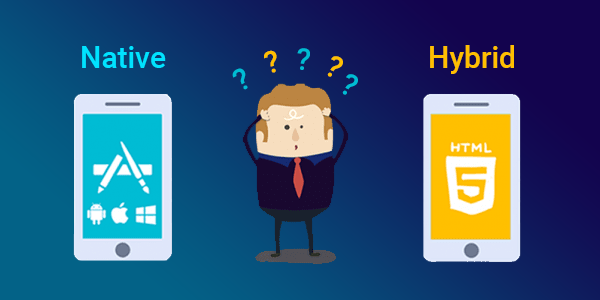
Choosing the Tech Stack: Native Kotlin or Cross-Platform?
For an Android-only or Android-first app, native Kotlin is the default choice. Google calls Android development 'Kotlin-first' and reports that apps containing Kotlin code are 20% less likely to crash (Android Developers). For the interface, Jetpack Compose is Android's recommended modern toolkit for native UI.
If you need iOS too, a cross-platform framework can share one codebase across both platforms.
| Approach | Best for | Trade-off |
| Native (Kotlin + Jetpack Compose) | Hardware-heavy, offline-first, high-performance or regulated apps | Separate build if you also need iOS |
| Flutter | Customer apps needing iOS and Android on one budget | Native modules needed for some hardware |
| React Native | Teams with JavaScript skills and a web back end | Heavy graphics need extra tuning |
Our typical native Android stack: Kotlin, Jetpack Compose, Room or Realm for offline storage, Retrofit for APIs, Firebase for push notifications and crash reports, and Fastlane or GitHub Actions for automated releases. For a deeper comparison, read our hybrid vs native guide.
The Custom Android App Development Process (and How Long Each Stage Takes)
A custom Android MVP typically reaches a pilot in 8 to 14 weeks. A mid-complexity app takes 4 to 7 months, and an enterprise platform 6 to 10 months. The pilot and Google Play launch come after these build stages.
| Stage | What happens | MVP | Mid-complexity app |
| 1. Discovery and requirements | Map users, roles, workflows, integrations and compliance needs; agree a fixed estimate | 1 week | 1 to 2 weeks |
| 2. UX and architecture design | Design screens for real conditions, including offline use; plan data model, APIs and sync | 1 to 2 weeks, overlapping the first sprint | 2 to 4 weeks |
| 3. Sprint-based development and integration | Build in 2-week sprints with a demo each sprint; connect ERP, CRM, SAP or EHS inside the sprints | 4 to 8 weeks | 10 to 20 weeks |
| 4. QA and device testing | Harden on real devices across Android versions, screen sizes and networks | 1 to 2 weeks | 2 to 3 weeks |
| Build total (to pilot) | 8 to 14 weeks | 4 to 7 months | |
| 5. Pilot | Release to a small group of real users on a closed testing track | 2 to 4 weeks | 2 to 4 weeks |
| 6. Google Play launch | Store listing, data safety form, review and staged rollout | 1 to 2 weeks | 1 to 2 weeks |
| 7. Monitoring and support | Track crashes, performance and ratings; update for each Android release | Ongoing | Ongoing |
Phased releases put a working app in users' hands early. When we rebuilt the Domino's ordering app on IBM MobileFirst and AWS with cloud auto-scaling for peak-hour traffic, the rebuild contributed to 3x growth in mobile sales.
What affects the timeline
- Scope changes after discovery add sprints, so agree on the scope of the first release before design starts.
- Legacy integrations with older ERP or SAP systems need extra time for data mapping and access approvals.
- Security reviews and penetration testing need their own window in the plan for apps handling sensitive data.
- Stakeholder approvals move faster when one product owner on your side signs off each sprint demo.
How Much Does Custom Android App Development Cost?
Most custom Android apps cost between $15,000 and $150,000. In our projects, enterprise apps with deep integrations have reached $900,000 or more. The ranges below come from projects our team has scoped and delivered. They include discovery, UX/UI design, Android development, back-end and API work, QA and launch, and exclude third-party licenses, hosting and paid APIs.
| App tier | Typical features | Cost (USD) | Timeline |
| MVP | Core flow, sign-in, basic admin, one integration | $15,000 to $50,000 | 8 to 14 weeks to pilot |
| Mid-complexity | Payments, offline sync, push, dashboards, 2 to 3 integrations | $50,000 to $150,000 | 4 to 7 months |
| Enterprise | Multiple roles, SAP or ERP sync, SSO, audit trails, security testing | $150,000 to $900,000+ | 6 to 10 months |
| Annual maintenance | OS updates, security patches, fixes, small features | 15 to 20% of build cost per year | Ongoing |
What moves the price
- Number of user roles and screens. One of our client platforms runs 11 roles with regional scoping, which adds design and testing time.
- Integrations. Each link to SAP, an ERP, a CRM or a payment gateway adds data mapping, error handling and testing.
- Offline-first sync. Local storage and conflict handling add effort, and pay back quickly for field teams.
- Hardware. GPS, camera capture, NFC, RFID and Bluetooth devices need testing on real hardware.
- Security and compliance. Encryption, SSO and independent penetration testing are standard for apps that handle sensitive data.
- Native vs cross-platform. In our projects, one cross-platform codebase has often cost 30 to 40% less than two separate native builds.
One small fixed cost to note: a Google Play developer account has a one-time US$25 registration fee (Google Play Console Help). For a broader breakdown across iOS and Android, see our mobile app cost guide.
Want a Number for Your App?
Send us your feature list, user roles, integrations and launch target. We will reply within one business day with an indicative budget and timeline. Request your estimate.
Google Play Requirements to Plan For in 2026
Three Google rules shape every new Android project this year. Build them into the plan from day one to keep your launch date on track.
| Requirement | What it means | Source |
| Target API level 36 | Since 31 August 2026, new apps and app updates must target Android 16 (API level 36) or higher. Extensions can be requested until 1 November 2026. | Android Developers |
| Closed testing for new personal accounts | Personal developer accounts created after 13 November 2023 must run a closed test with at least 12 testers opted in for 14 days before production access. | Play Console Help |
| Developer verification | Apps installed on certified Android devices must come from verified developers. From 30 September 2026 this applies to installs from participating app stores in Brazil, Indonesia, Singapore and Thailand; Google plans a worldwide rollout in 2027. | Android Developers |
Tip: publish under your company's own organization account, not a developer's personal account. You keep full control of the listing, and the app stays yours if you change vendors. At Triazine, code repositories live in the client's organization from day one, and the client owns the code and IP.
How to Choose a Custom Android App Development Company
The right Android mobile application development company shows proof, not promises. Use this checklist when you compare Android app development services:
- Apps live at scale. Ask for apps in production with real user numbers, and download them from Google Play.
- Your industry. Look for experience with your workflows and compliance needs, such as utilities, healthcare or industrial safety.
- Integration depth. Ask how they connected past apps to SAP, ERP or CRM systems.
- Recognized delivery standards. CMMI Level 3 and ISO 9001:2015 show a repeatable process.
- A clear estimate before build. You should get scope, milestones and a named team after discovery.
- Full code and IP ownership. The code, data models and documentation should be yours, under an NDA from the first call.
- Support after launch. Check how they handle new Android versions, crashes, and Play policy updates.
- Local accountability. For US companies, a US contracting entity and team overlap make collaboration smooth.
Triazine Software is an Android app development company with 11+ years of enterprise delivery, CMMI Level 3 and ISO 9001:2015 standards, and a US entity, Triazine Software LLC, with a dedicated US team. If you have a plan and need engineers, you can also hire dedicated Android developers. Explore our full mobile app development services and ongoing app support after launch.
Frequently Asked Questions
What is custom Android app development?
It is designing and building an Android app around your own users, workflows and systems, rather than licensing a ready-made product. You own the code and can extend it as your business grows.
How much does a custom Android app cost?
In our projects, an MVP typically costs $15,000 to $50,000, a mid-complexity app $50,000 to $150,000, and an enterprise app $150,000 to $900,000+. Integrations, offline sync, and security are the biggest price drivers.
How long does it take to build a custom Android app?
An MVP reaches a pilot in 8 to 14 weeks. A mid-complexity app takes 4 to 7 months, and an enterprise platform is 6 to 10 months.
Should a new Android app use Kotlin or Java?
Kotlin. Google describes Android development as Kotlin-first and recommends starting new apps in Kotlin, with Jetpack Compose for the user interface.
Should I build native Android or cross-platform?
Choose native Kotlin for hardware-heavy, offline-first or high-performance apps. Choose Flutter or React Native when you need iOS and Android quickly on one budget.
Can a custom Android app work offline?
Yes. Data is stored on the device, captured offline, and synced automatically when the connection returns, with rules to resolve conflicting updates.
Who owns the source code?
You should. At Triazine, the code, data models, design files and documentation belong to the client, and an NDA covers every project from the first conversation.
What does it cost to maintain an Android app?
Plan on 15–20% of the build cost each year. That covers updates for new Android versions, Google Play target API rules, security patches and small improvements.
Get a Free Estimate for Your Android App
Share your goals, your users and the systems your app needs to connect with, and get a free estimate. Within one business day, our team will reply with an indicative budget, a delivery timeline and a recommended first release. Get in touch to start the conversation.
Sources
- StatCounter, Mobile Operating System Market Share Worldwide
- Android Developers, Kotlin for Android
- Android Developers, Target API level requirements for Google Play apps
- Google Play Console Help, Get started with Play Console










































 Get free quote